Checklist for Finding Last-Minute Flight Deals

Checklist for Finding Last-Minute Flight Deals
Finding last-minute flight deals doesn’t have to be stressful. Here are the key takeaways to help you save money and make spontaneous travel plans work:
- Be flexible with dates and times: Mid-week flights (Tuesdays or Wednesdays) and red-eye departures are often cheaper. Avoid booking within 21 days of departure to dodge price hikes.
- Consider alternative airports: Check regional airports like Manchester or Birmingham for better fares, but factor in transfer costs.
- Set a clear budget: Account for extras like baggage fees and seat selection to avoid surprises.
- Use apps like Tripaway: Get instant alerts for price drops, mistake fares, and flash sales.
- Compare prices on multiple platforms: Use tools like Google Flights and Skyscanner to track fares and spot trends.
- Watch out for flash sales: Follow airline newsletters and social media for limited-time offers.
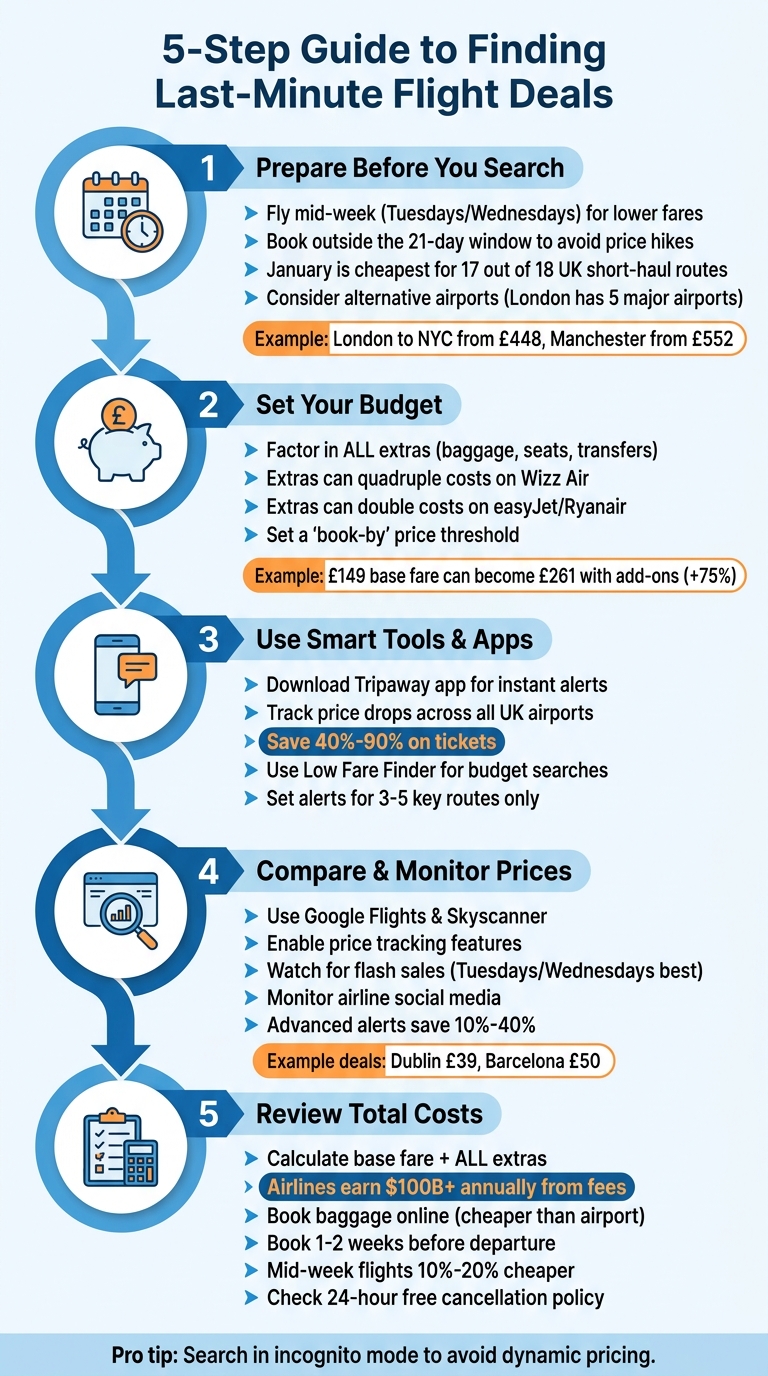
5-Step Guide to Finding Last-Minute Flight Deals
How to find cheap flights LAST MINUTE (5 easy tips)
sbb-itb-7ea9975
Prepare Before You Search
Planning ahead can save both time and money. The key difference between scoring a genuine bargain and falling for a false economy often lies in the decisions you make before you start searching.
Be Flexible with Dates and Times
Airline fares change constantly based on demand. Mid-week flights, particularly on Wednesdays or Thursdays, tend to cost less. Similarly, red-eye and evening departures are often cheaper since fewer people opt for them. Travelling during off-peak seasons - such as Europe in January or the Caribbean in late spring - can greatly increase your chances of finding last-minute availability. For instance, January is the cheapest month to fly on 17 out of 18 major short-haul routes from the UK.
Another tip? Keep the 21-Day Rule in mind. Scott Keyes, Founder of Going, explains:
"The 21-Day Rule is still the gold standard if there's a flight you're looking at and it's getting close and you're trying to decide whether to book or not."
Once you're within three weeks of departure, airlines often treat bookings as business travel, which usually means higher prices. Even shifting your trip by just a day can help you dodge these price hikes.
Consider Alternative UK Airports
Don't limit yourself to just one departure point. London alone has five major airports: Heathrow (LHR), Gatwick (LGW), Luton (LTN), Stansted (STN), and London City (LCY). Regional airports like Manchester (MAN), Birmingham (BHX), Edinburgh (EDI), Glasgow (GLA), Bristol (BRS), and Liverpool (LPL) also frequently offer competitive last-minute fares.
Prices can vary significantly depending on where you fly from. For example, in May 2026, flights from London to New York start at £448, while the same route from Manchester begins at £552. However, before booking from a more distant airport, factor in additional costs like transfers, parking, or overnight stays, as these can quickly eat into any savings.
Once you've explored your airport options, set a clear budget to guide your search.
Define Your Budget in Pounds (£)
Having a clear spending limit is crucial before you start looking for flights. Keep in mind that the quoted fare is often just part of the total cost. Adding extras like cabin luggage or seat selection can significantly inflate the price - quadrupling the cost on Wizz Air and doubling it on easyJet or Ryanair.
James Harrington, Senior Travel Editor at Bookingflight.uk, offers this practical advice:
"A real bargain should survive a quick stress test: if you add the baggage you actually need, choose a sensible flight time, and factor in the airport journey, is it still a good price?"
This simple check ensures you're looking at a genuine deal. Setting a "book-by" threshold can also help you act quickly when a fare hits your target price, instead of hesitating and missing out. For example, if London to Barcelona normally costs £140, then £48 is a great deal. But if the usual price is closer to £60, that same £48 fare might only offer modest savings.
Use Apps and Tools to Find Deals
Using dedicated apps like Tripaway can make finding last-minute discounts much easier. Manually checking multiple sites is not only time-consuming but also impractical, as airfare prices can change several times a day. Apps like Tripaway simplify this process by tracking millions of flight routes and sending instant alerts when prices drop. For instance, Tripaway highlights hidden deals, mistake fares, and flash sales from UK airports, helping travellers save anywhere from 40% to 90% on tickets. The app’s homepage features sections like "Deals" and "Flash Sales", giving users quick access to time-sensitive offers. Next, we’ll look at how to customise your alerts for even greater savings.
Download the Tripaway App
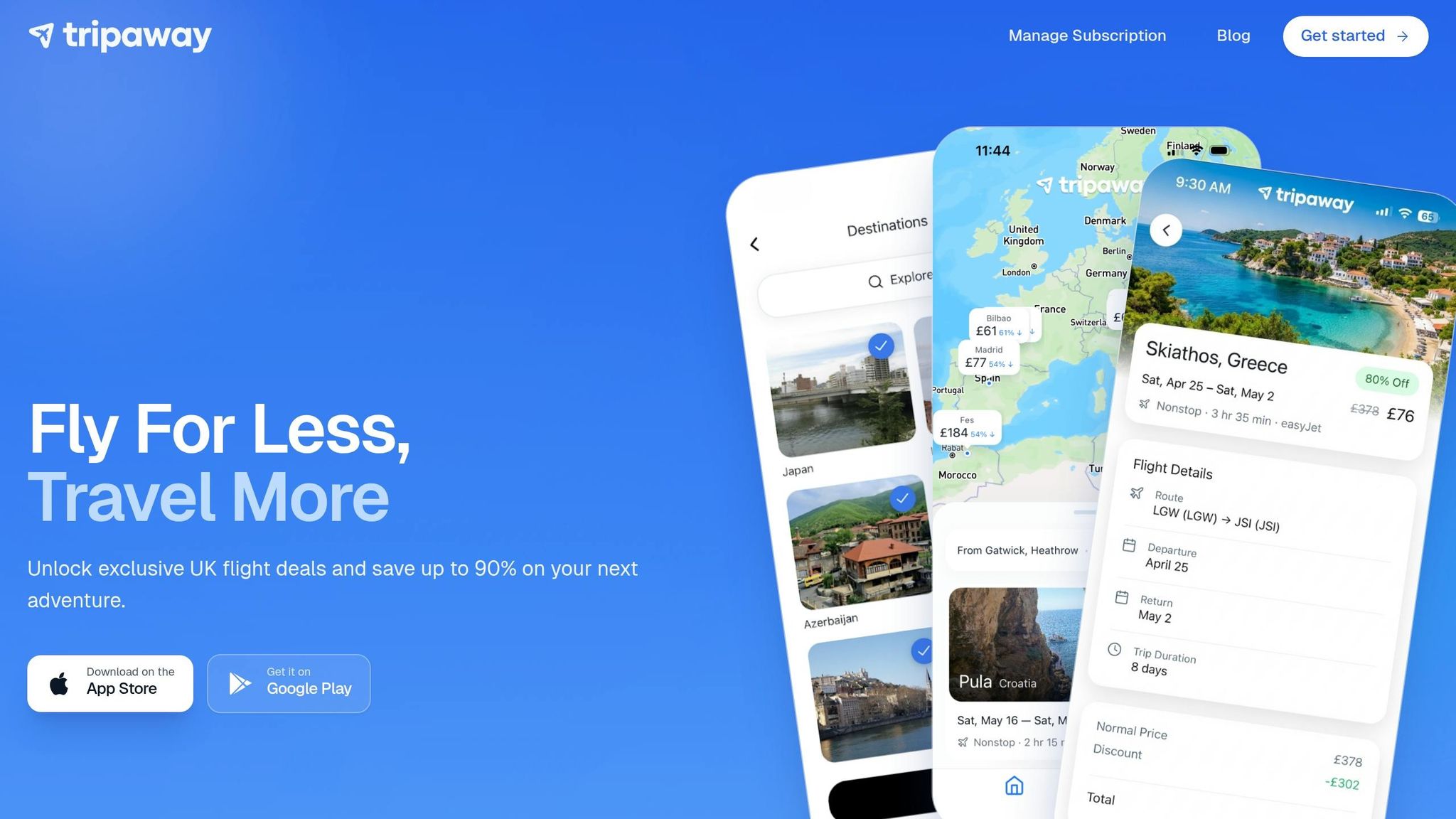
Tripaway scans flights from all major UK airports, including Heathrow, Gatwick, Manchester, Birmingham, and Edinburgh, to uncover unadvertised price reductions. The app’s Low Fare Finder and calendar view make it easy to compare prices across different dates and budgets.
- The Low Fare Finder allows you to set a budget range and instantly view all destinations within that price point. You can also sort results by "Cheapest" to quickly spot the best deals.
- The calendar view is particularly handy for last-minute trips, as it lets you scan an entire week or month for the most affordable departure and return dates.
These tools, combined with personalised alerts, ensure you never miss a great deal.
Set Up Alerts for Your Routes
Oliver Bennett, Senior SEO Travel Editor, emphasises the importance of effective fare alerts:
"The best fare alert is the one you will actually act on. Set a price threshold that feels genuinely bookable, not just 'interesting,' and track fewer routes more carefully."
To create an alert in Tripaway, search for your desired route, navigate to "Price Alerts", and adjust the slider to set your target price. The app will notify you as soon as the fare meets your criteria. For last-minute flights, enable push notifications to catch flash sales before they sell out.
To avoid being overwhelmed, limit your alerts to three to five key routes. Include your preferred route and a couple of practical alternatives, such as nearby departure or arrival airports. This "route ladder" approach increases your chances of securing a great deal while keeping notifications manageable.
Compare and Monitor Flight Prices
Once you've set up your alerts, the next step is to compare fares across different platforms and keep an eye on price changes as your departure date approaches. Using metasearch tools is a great way to spot price drops. Platforms like Google Flights and Skyscanner gather fares from multiple airlines and travel agencies in one place. However, be cautious - low headline prices can sometimes hide additional costs that may inflate the total.
Search Multiple Platforms
Google Flights and Skyscanner are excellent tools for comparing fares across various dates, airlines, and destinations. With Google Flights' calendar view, you can easily explore an entire week or month to find the cheapest departure and return dates. For those with flexible travel plans, the "Any dates" option is a handy feature - it sends email updates when the lowest price for a route drops significantly over a month. If you're focused on specific dates or flights, enable the "Track prices" feature to get notified about potential fare increases or when a deal is about to expire.
To avoid being overwhelmed, focus on tracking three to five top options. Ignore small price changes of £3–£5 to prevent unnecessary alerts. It's also a good idea to monitor your primary route alongside two backup options to keep your choices open.
Enable Price Alerts
Set three clear price points: your ideal price, a reasonable price, and a maximum limit. This strategy helps you make quick decisions without second-guessing. Google Flights' predictive insights can be particularly helpful, as they provide estimates on when prices might rise, along with a confidence level for those predictions. Pay close attention to alerts stating that a fare "expires soon", as this usually signals an imminent price increase.
When an alert catches your attention, double-check the fare on the airline's official website to ensure the final cost includes all extras. As highlighted by Scanflights.co.uk:
"A £5 lower fare that adds £35 in baggage fees is not a saving; it is a marketing illusion".
Monitor Airline Flash Sales
In addition to using metasearch tools and alerts, keep an eye out for flash sales through social media and newsletters. Some discounts and limited-time offers may not appear on metasearch engines right away. Following UK airline social media accounts and subscribing to email newsletters can help you spot these deals. Tuesdays and Wednesdays are often the best days for lower fares, as airlines tend to align their price drops midweek. January is particularly rewarding for budget travellers - it was the cheapest month for 17 out of 18 short-haul routes in 2024, with return fares as low as £39 to Dublin and £50 to Barcelona.
For even bigger savings, watch out for mistake fares caused by currency conversion errors or manual input mistakes. These deals are rare and fleeting, lasting only minutes or hours. Joining Telegram channels or Twitter/X communities dedicated to travel deals can help you catch them in real time. Advanced price alerts can also help you save between 10% and 40% on popular routes.
Review Total Costs Before Booking
Low headline fares can be misleading, as they rarely include the full cost of your trip. Airlines worldwide rake in over $100 billion annually from extra fees like baggage, seat selection, and payment processing charges. These add-ons can significantly inflate the price, turning an appealing deal into something far pricier. To avoid surprises, calculate the total cost - including all extras - and carefully review booking conditions before finalising your purchase.
Calculate Total Price with Extras
To get a clear picture of what you'll actually pay, break down every fee that applies to your journey. Start with the base fare, then factor in costs for checked baggage, seat selection, and payment processing. For instance, a £149 ticket can quickly climb to £261 - a staggering 75% increase - once you add a carry-on, checked bag, and seat selection.
Booking baggage online is a smart move, as airport fees for luggage are often higher. As Jordan Ellis, Senior Travel Content Strategist, aptly puts it:
"If you compare fares without factoring in add-ons, you're not really comparing prices - you're comparing marketing."
Once you've calculated the total cost, you'll be in a better position to decide when to book your tickets.
Book at the Right Time
Timing matters when it comes to securing the best fares. Flights departing midweek - especially on Tuesdays and Wednesdays - are often 10% to 20% cheaper than those on Fridays or Sundays. If you're booking last minute, aim to confirm your purchase 1–2 weeks before departure. Saturdays can also provide good value, as they’re less favoured by business travellers.
Check Flexible Booking Options
After deciding on the timing, make sure your ticket offers some flexibility in case plans change or fares drop. Many airlines allow free cancellations within 24 hours of booking, provided the ticket was purchased at least seven days before departure. This gives you a window to secure a deal while keeping your options open. Additionally, some airlines have permanently eliminated change fees, allowing you to rebook if prices fall after your purchase - often crediting you with the difference. Before committing, double-check the airline's rebooking policies and ensure you understand any date-change terms.
Conclusion
Grabbing the best last-minute flight deals takes a mix of preparation, smart tools, and quick decision-making. By staying flexible with your travel dates and departure airports, setting a clear budget in pounds, and accounting for all extra costs, you'll be ready to pounce when a real bargain shows up. As Mark Ellwood, Editor-at-Large at Robb Report, puts it:
"Tech tools can be a traveller's secret weapon to tracking these price fluctuations and using them to your advantage".
Using tools like the Tripaway app, which monitors millions of routes to alert you to price drops and flash sales, can give you a real edge. But remember, a cheap fare isn't always a great deal - factor in extras like baggage fees, seat selection, and transfers to see the full picture.
Search in incognito mode to avoid price hikes caused by dynamic pricing, and keep the 21-day rule in mind as a guide for decision-making. Set up fare alerts, calculate total costs carefully, and act fast when the right deal comes along. With these strategies, last-minute travel can be both exciting and well-planned.
FAQs
When should I stop waiting and book a last-minute fare?
When you notice a genuine price drop that aligns with your travel plans, it’s best to book a last-minute fare straight away. Airfares can change rapidly, and holding out for an even lower price could result in missing the deal altogether. Make sure the fare fits your budget and schedule, and act quickly to lock it in before prices rise again or the deal vanishes.
Which extra fees should I add before calling it a “deal”?
When evaluating whether a flight is genuinely a bargain, it's essential to consider all the extra fees airlines often tack on. These can include charges for seat selection, baggage, payment methods, and even priority boarding. These additional costs can quickly inflate the total price. To avoid being caught out by "cheap" fares that aren't as affordable as they seem, always calculate the actual cost by adding these predictable fees to the base fare.
How do I set Tripaway alerts without getting spammed?
To keep your Tripaway alerts useful and avoid spam, tweak your notification settings in the app. Focus on alerts for major price drops or particular destinations that interest you. You can also filter updates to make sure they stay relevant. Adjust the frequency of notifications or even pause them temporarily when needed, so you can stay updated without feeling bombarded.