How Flash Sales Cut Airfare Costs
How Flash Sales Cut Airfare Costs
Flash sales are a quick way to save on airfare, offering discounts of up to 60%. These sales typically last 24–72 hours and are driven by AI algorithms that adjust prices based on demand, unsold seats, and competitor pricing. Airlines use them to fill empty seats, compete on popular routes, and attract budget-conscious travellers without permanently lowering fares.
Key points:
- Savings: Discounts range from 25% to 60%, with examples like £90 round-trips from Chicago to Ireland.
- Timing: Best deals often appear midweek, especially on Wednesdays, and during the middle of a sale.
- Tools: Apps like Tripaway help travellers monitor flash sales and secure discounts quickly.
- Strategy: Flexibility with travel dates and airports increases chances of finding lower fares.
Flash sales reward quick action and preparation. With the right tools and timing, you can significantly cut travel costs.
Flash Sale Savings: Practical Examples
Flash sales offer a glimpse into how savvy travellers can slash airfare costs, especially on long-haul routes. Airlines often use these limited-time promotions to fill unsold seats, and the savings can be impressive. Let’s look at a couple of real-life examples to see how these deals work in practice.
Example 1: Frankfurt to Bangkok with Turkish Airlines
Turkish Airlines once ran a flash sale offering round-trip tickets from Frankfurt to Bangkok for just €399 (about £340). This deal represented a 30%-50% discount compared to regular prices. By being transparent about fare details, the airline also managed to build trust among travellers.
The Frankfurt–Bangkok route is highly competitive, with several airlines vying for passengers. This likely pushed Turkish Airlines to launch the sale, using lower prices as a strategy to fill seats that might otherwise have gone empty.
Example 2: Tokyo to Los Angeles with ZIPAIR
ZIPAIR, a low-cost carrier under Japan Airlines, offered base fares of US$499 (approximately £400) for flights between Tokyo and Los Angeles. Adding checked baggage fees brought the total to about US$615 (around £490), which was still a significant reduction compared to standard fares.
The airline operates cost-efficient Boeing 787-8 Dreamliners with 272 economy seats. Their unbundled pricing model kept base fares low by including only 7 kg of carry-on luggage, with extras like checked bags available for an additional fee. For those who didn’t need extras, the savings were even greater. These examples highlight how airlines use pricing strategies to target budget-conscious travellers while maximising seat occupancy.
sbb-itb-7ea9975
Research Data on Flash Sale Discounts
Flash Sale Airfare Savings: Discount Rates and Optimal Booking Times
Typical Discount Rates by Route Type
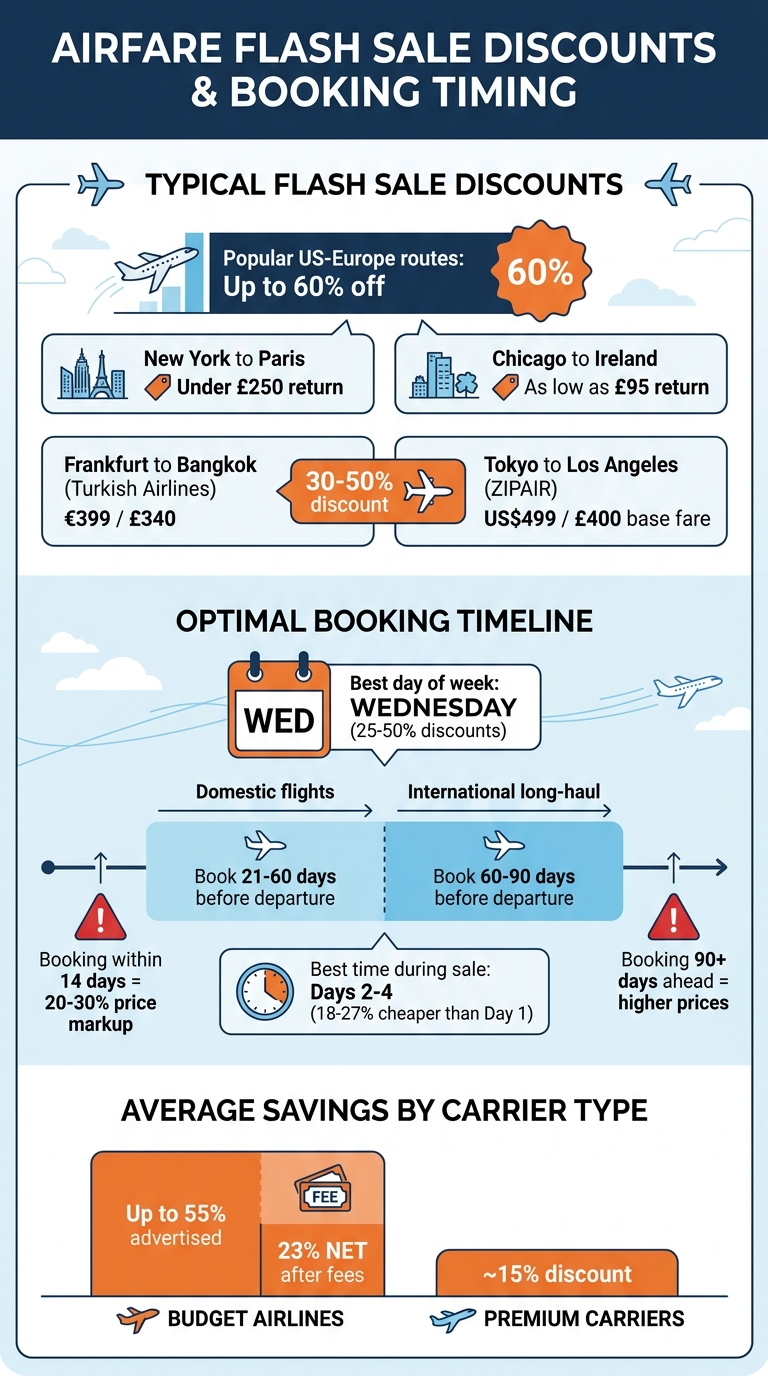
Flash sales can offer impressive savings, but the discounts often depend on the route and time of booking. The steepest price drops are usually found on busy routes between major hubs, where airlines compete heavily for passengers. For example, fares on popular US-to-Europe routes like New York to Paris have been spotted for under £250 return, while flights from Chicago to Ireland have dropped to as low as £95 during particularly aggressive sales campaigns. Recognising these patterns can help travellers make the most of their budget.
When to Book for Maximum Savings
Timing plays a massive role in securing the best deals. While many people jump to book as soon as a flash sale launches, research shows that the biggest savings often emerge between days 2 and 4 of the sale. This is because airlines use machine learning to tweak their promotional strategies, offering deeper discounts on routes that aren’t selling as quickly. In fact, data from late 2025 revealed that fares booked mid-campaign were 18–27% cheaper compared to those snagged on the first day.
If you’re aiming for the best day of the week to book, Wednesday stands out, with discounts ranging from 25–50%. For domestic flights, the sweet spot for booking is typically 21–60 days before departure. Booking too far ahead (more than 90 days) or too close to the travel date (within 14 days) often leads to higher prices. For international long-haul flights, the ideal window shifts to 60–90 days before departure. Waiting until the last minute, especially within 14 days of travel, can result in fares being marked up by 20–30%.
How to Find and Use Flash Sales
Flight Deal Monitoring Apps
Finding flash sales is all about speed and having the right tools at your disposal. Apps like Tripaway are designed to scan a massive number of routes for hidden price drops, mistake fares, and flash sales. These tools can help you save anywhere from 40% to 90% on fares, but the catch is that these deals often disappear within minutes.
One of the biggest perks of these apps is their automated tracking. Instead of spending hours refreshing airline websites, these tools monitor fare-class changes, multi-city route patterns, and airline-specific promotions around the clock. Some apps even use colour-coded signals (red, yellow, green) to show how likely you are to grab a ticket within your budget. To improve your chances, it’s smart to use two tracking methods - one broad metasearch engine and one specialised alert tool - to compare and verify fares before booking. This kind of automation can make all the difference when chasing fleeting deals.
Free vs Premium Plan Features
Most flight deal apps offer both free and premium plans, and these tiers can make or break your ability to snag time-sensitive flash sales. Free plans usually come with basic features like limited alerts and filters tailored to UK airports. Premium plans, however, provide unlimited notifications, advanced filters (e.g., cabin class, layover times), and global coverage. These added features significantly enhance your ability to act quickly.
| Plan Name | Price | Notifications | Filters | Airport Coverage |
|---|---|---|---|---|
| Free Plan | £0 | Limited deal alerts | Basic filters | UK airports only |
| Premium Plan | Variable | Unlimited alerts | Advanced filters | Global coverage |
Timing is everything: Premium users get real-time push notifications the moment a flash sale or mistake fare pops up, while free plans often rely on slower email alerts. For example, in April 2026, a traveller with a premium alert system saved $312 (approximately £245) on a transatlantic flight by combining flexible-date monitoring with saved payment details, completing the booking in just 12 minutes.
Practical Tips for Better Deals
To make the most of flash sales, preparation and flexibility are your best allies. Start by setting three price thresholds - 'watch,' 'buy,' and 'book now' - to help you act decisively when a deal pops up. This approach can eliminate hesitation and save precious time.
Flexibility is another key factor. Use fare calendars to check prices across an entire month, as shifting your departure by just a day or two can lead to substantial savings. Keep a list of alternative routes and nearby airports, such as Heathrow, Gatwick, or Luton, to increase your options. Also, try searching for fares early on Tuesday mornings, just after midnight, when airlines often release fresh inventory.
Being prepared is equally important. Save your passport details, frequent flyer numbers, and payment methods securely so you can finalise a booking in under five minutes. Enable push notifications, email alerts, and app updates simultaneously to ensure you never miss a deal. Lastly, always factor in the total trip cost, including baggage fees, seat selection, and airport transfers, as these extras can sometimes outweigh the initial savings.
Conclusion
Flash sales remain a powerful way to reduce airfare costs, rewarding those who act quickly and prepare in advance. Budget airlines often promote savings of up to 55% (though actual net savings average around 23% after accounting for fees), while premium carriers typically offer discounts closer to 15%. This makes it essential to spot genuine bargains amidst the noise.
Timing and flexibility are key to securing the best deals. Flash sales usually run from Tuesday to Thursday, between 12:00 and 17:00 local time. Travellers willing to shift their departure dates by a day or two - or consider alternative airports like Heathrow, Gatwick, or Luton - can often uncover even greater discounts. These short-lived offers highlight the value of using advanced tools to stay ahead.
This is where apps like Tripaway prove invaluable. By scanning millions of flight paths in real time, Tripaway identifies hidden price drops, mistake fares, and flash sales the moment they appear. Users can save anywhere from 40% to 90% on airfare, with automated tracking removing the hassle of constantly checking airline websites. The app’s instant push notifications ensure you’ll never miss a deal that fits your preferences. For those serious about saving on travel, tools like this can mean the difference between landing an incredible deal and missing out entirely.
With airlines increasingly relying on AI-driven pricing, flash sales are becoming more targeted and less frequent. Advanced algorithms now allow carriers to predict demand with precision, reducing the need for last-minute discounts to fill empty seats. As a result, specialised monitoring tools have become even more essential, helping travellers seize the smaller but still valuable opportunities that remain.
FAQs
How can I tell if a flash sale fare is genuinely good value?
To figure out if a flash sale fare is worth it, look beyond the tempting headline price. Consider the total trip cost, which includes things like baggage fees, change policies, and how flexible the route options are. To make sure the deal is legitimate, rely on trusted fare tracking tools or alerts. These can help you pinpoint real savings while steering clear of unexpected extra costs.
What fees can wipe out the savings on flash sale tickets?
When snagging flash sale tickets, it's easy to get caught up in the excitement of a low fare. But don't forget about the hidden extras that can quickly add up. Things like baggage fees, change fees, and other charges often sneak in after your initial booking. These costs can take a big bite out of the savings you thought you were getting. Always make sure to include these potential expenses when weighing up whether a deal is as good as it seems.
What should I prepare in advance to book a flash sale in minutes?
To snag a flash sale deal efficiently, it’s all about preparation. Here’s how you can get ahead:
- Know your route and dates: Decide on your destination and travel dates in advance.
- Research typical fares: Use flight search tools to get a sense of the usual price range.
- Set up fare alerts: Enable notifications to stay updated on price drops.
- Have payment details ready: Save time by ensuring your payment information is accessible.
- Track prices over time: Keep an eye on fares for a few days to confirm it’s a real bargain.
Being ready means you can act fast and grab the best deal when it pops up!