Mistake Fares Explained: How to Spot and Book Them
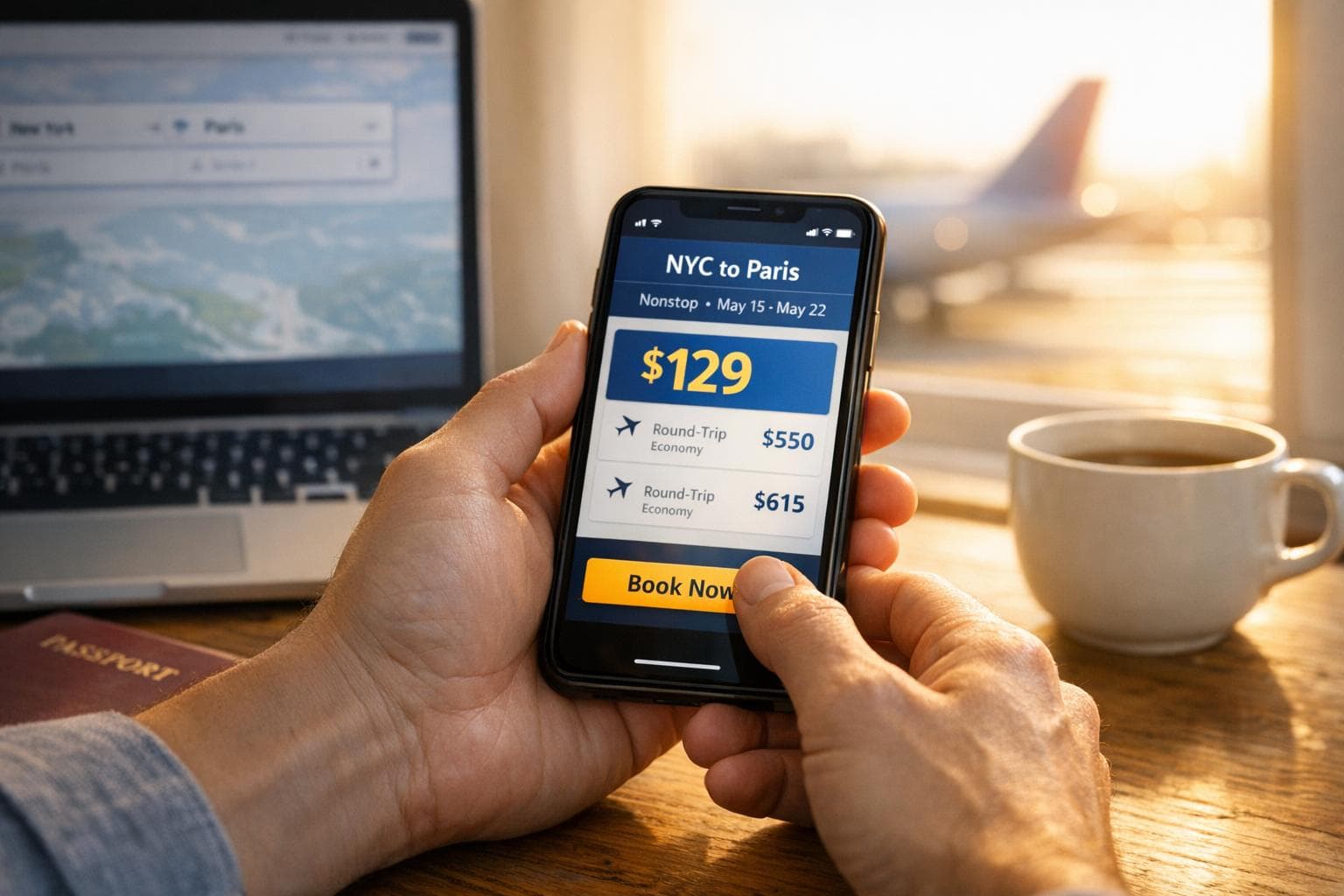
Mistake Fares Explained: How to Spot and Book Them
Mistake fares are rare pricing errors by airlines that can save you 60% to 90% on flights. These occur due to typos, system glitches, or currency mistakes. For example, Cathay Pacific once sold first-class tickets worth $10,000 for just $675. Airlines honor most mistake fares (70%-90%), but they can cancel them, offering a refund instead. Acting fast is crucial since these deals often disappear within hours.
Here’s how to find and book mistake fares:
- Use tools like Tripaway: Get instant alerts for pricing errors.
- Be flexible: Mistake fares are unpredictable, so adjust your travel dates and destinations.
- Book immediately: Use the airline's website for faster ticket confirmation.
- Wait before finalizing other plans: Airlines may cancel mistake fares within two weeks.
Mistake fares are rare (less than 0.2% of deals), but with the right tools and strategies, you can take advantage of these incredible discounts.
How to find & book mistake fares (Tiny Mic, Big Savings #2)
Why Mistake Fares Happen
Mistake fares occur because of errors in the intricate systems airlines use to set prices. Understanding these causes can help you quickly spot and take advantage of such opportunities. Here’s a closer look at the main reasons behind mistake fares: human errors, system glitches, and currency issues.
Human Errors in Fare Input
Sometimes, all it takes is a simple typo to create a massive discount. When airline employees manually enter fare information, they might hit the wrong key, forget a zero, or misplace a decimal point. For instance, a $1,000 ticket could accidentally be listed as $100 due to a missing zero. These small mistakes can result in discounts as steep as 50% to 90%. Spotting these errors can be a huge advantage, especially when using tools designed to flag unusually low fares.
System Glitches and Algorithm Failures
Airlines rely on automated systems to manage millions of ticket prices, but even these advanced tools aren’t foolproof. Dynamic pricing algorithms, which adjust fares based on supply and demand, can sometimes drop prices too low. As Katie Genter from The Points Guy explains:
"Sometimes, a dynamic pricing algorithm drops a fare too low in an attempt to manage capacity".
Additionally, technical issues between Global Distribution Systems and booking platforms can lead to missing charges, such as taxes or surcharges. A famous example occurred in December 2014 when Etihad Airways mistakenly sold round-trip tickets from New York to Abu Dhabi for just $187 due to a website glitch. Thousands of these tickets were purchased - and honored by the airline. While system errors create exciting opportunities, currency issues introduce another layer of pricing mistakes.
Currency Conversion Problems
Currency mishaps can lead to jaw-dropping discounts. One common error happens when a fare’s numerical value is correct, but it’s listed in the wrong currency. For example, a ticket intended to cost $4,000 USD might instead be displayed as 4,000 Hong Kong dollars (HKD), resulting in a massive price drop. Another issue arises with regional pricing, where airlines set fares in local currencies, like the Vietnamese dong or Chilean peso. If an international booking site uses an incorrect exchange rate, it can create an unintended bargain. Similarly, rapid currency devaluations can leave fares temporarily priced at outdated rates, giving travelers a chance to book tickets at a fraction of their usual cost.
How to Spot Mistake Fares Using Tripaway
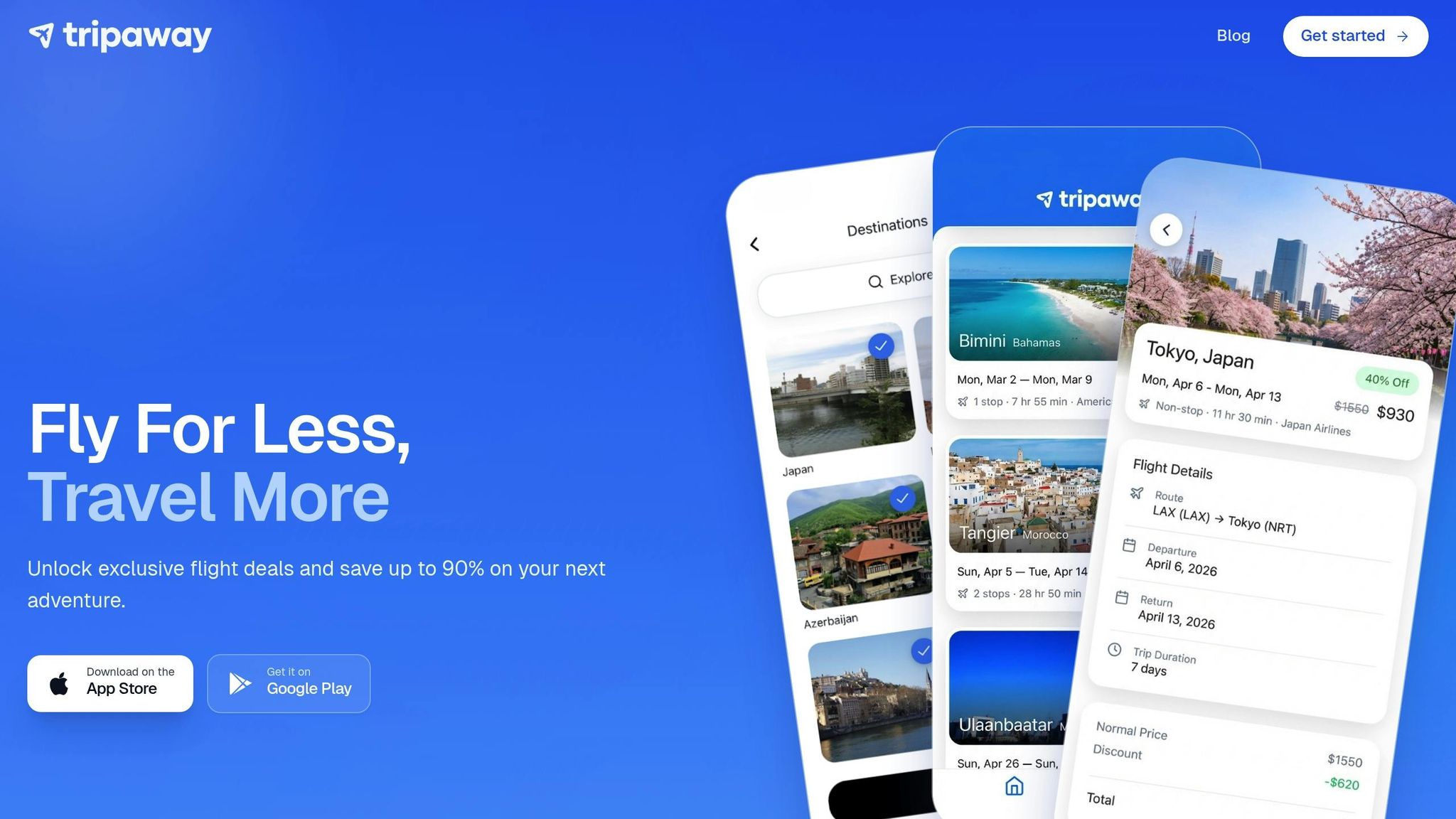
Now that you know why mistake fares happen, let’s dive into how you can find them. Tripaway makes it easy by constantly scanning flight routes to reveal unexpected price drops. These include mistake fares and flash sales that can slash airfare costs by 40% to 90% - but only for travelers departing from U.S. airports.
Set Up and Customize Your Tripaway Account
Getting started with Tripaway is quick and simple. Download the app on your iOS or Android device, set up your account, and choose your preferred U.S. departure airports. To increase your chances of finding mistake fares, add multiple nearby airports to your watchlist. For instance, if you live near several major hubs, include all of them to broaden your options. Premium users can take it a step further by adding specific destinations they dream of visiting. Don’t forget to enable push notifications - these alerts are 22% more effective than relying on desktop notifications alone. This way, you’ll be ready to act on time-sensitive deals as soon as they pop up.
Monitor Mistake Fares and Flash Sales
Tripaway uses advanced algorithms to track sudden fare changes caused by errors, technical issues, or currency shifts. When a mistake fare is detected, you’ll receive an instant alert with a link to book directly. While push notifications are effective, the in-app message inbox has an even higher open rate of over 22%, compared to just 5% for standard notifications. Make it a habit to check your inbox regularly, especially on Tuesday mornings when airlines often drop new promotions and updates. By using these alerts, travelers saved an average of $297 per trip in 2024. Once you spot a deal, review the plan options to see which one fits your travel style.
Compare Free vs. Premium Plans
Tripaway offers a range of plans designed to suit different travel needs. The Free Plan is ideal for occasional travelers, providing 1–3 weekly domestic economy deals from a single departure airport. If you travel more frequently, the Premium Plan offers daily deals, access to international routes, and the ability to track multiple departure airports and dream destinations. For the most comprehensive experience, the Premium+ plan includes real-time SMS alerts for mistake fares and flash sales, along with luxury and first-class deals.
| Plan Level | Alert Frequency | Key Features | Best For |
|---|---|---|---|
| Free | Weekly | 1–3 domestic economy deals, one departure airport | Occasional travelers |
| Premium | Daily | International routes, multiple airports, dream destinations | Frequent travelers |
| Premium+ | Real-time | SMS alerts, mistake fares, luxury/first-class deals | Deal hunters |
Real-time tracking for international flights can cut overall costs by 37%, making the Premium plans a smart choice if you frequently travel abroad or want to snag rare mistake fares.
Strategies for Finding Mistake Fares Fast
Snagging mistake fares requires a mix of flexibility, quick action, and a sharp focus on high-traffic routes. These incredible deals - sometimes offering discounts of 50% to 90% - can appear suddenly and disappear just as quickly, often within minutes or hours. Travelers who consistently score these deals share three key habits: they stay flexible, act without hesitation, and focus on routes where errors are more likely.
Be Flexible with Dates and Destinations
When it comes to finding mistake fares, flexibility is your best friend. Instead of choosing a destination first, let the price guide your plans. For example, in 2025, some travelers scored jaw-dropping deals like flights from New York City to Singapore for $171 one-way (usually $1,000), Seattle to South Korea for $359 roundtrip (normally $1,200), and Atlanta to Brazil for $287 roundtrip (typically $1,000).
"The more flexible you are with dates, times, and layovers, the higher your chances of finding and securing a mistake fare." - Scott Keyes, Founder, Going
Another strategy is starting your journey from a different hub. For instance, Gina and Jonathan Race booked roundtrip business class tickets from San Francisco to Bali for $629 by first flying Southwest from San Diego to reach the departure hub where the mistake fare originated. Plus, the U.S. 24-hour cancellation rule gives you a safety cushion - book the fare immediately, then figure out the details later without financial risk.
Once you've embraced flexibility, the next step is acting quickly to lock in the deal.
Act Quickly and Use Official Booking Platforms
Speed is everything when it comes to mistake fares. Book directly on the airline's website as soon as possible to ensure your ticket is issued promptly. Third-party booking sites can introduce delays, giving airlines time to catch and correct the pricing error before your reservation is confirmed.
Always use a credit card for faster refunds and better dispute protection. Avoid calling the airline to confirm the fare - this can alert them to the mistake and lead to faster corrections. Once you receive your confirmation email, check for a 13-digit electronic ticket number to ensure the booking is finalized and not just a reservation. Additionally, wait at least two weeks before making any nonrefundable travel arrangements to ensure the airline honors the fare.
After securing your ticket, focus your efforts on monitoring routes where mistakes are most likely to occur.
Track High-Volume or Popular Routes
Mistake fares are more common on long-haul international flights, complex multi-city itineraries, and newly launched routes, where pricing systems are more prone to glitches. Routes involving currency conversions or fluctuations are especially vulnerable to errors. In 2025, Going tracked 16 mistake fares - more than double the number from 2024 - many of which appeared on major routes connecting the U.S. with Europe, Asia, and South America.
Pay particular attention to hubs like New York, Los Angeles, San Francisco, and Dallas, where high traffic and pricing complexity increase the chances of errors. Mistake fares are also more likely to surface during off-hours (10:00 PM to 2:00 AM) or mid-week (Tuesday through Thursday), when airlines typically update their pricing. The good news? Airlines honor around 80% to 90% of mistake fares, especially on U.S.-based routes, so your chances are solid if you act fast.
sbb-itb-7ea9975
Step-by-Step Guide to Booking Mistake Fares Securely
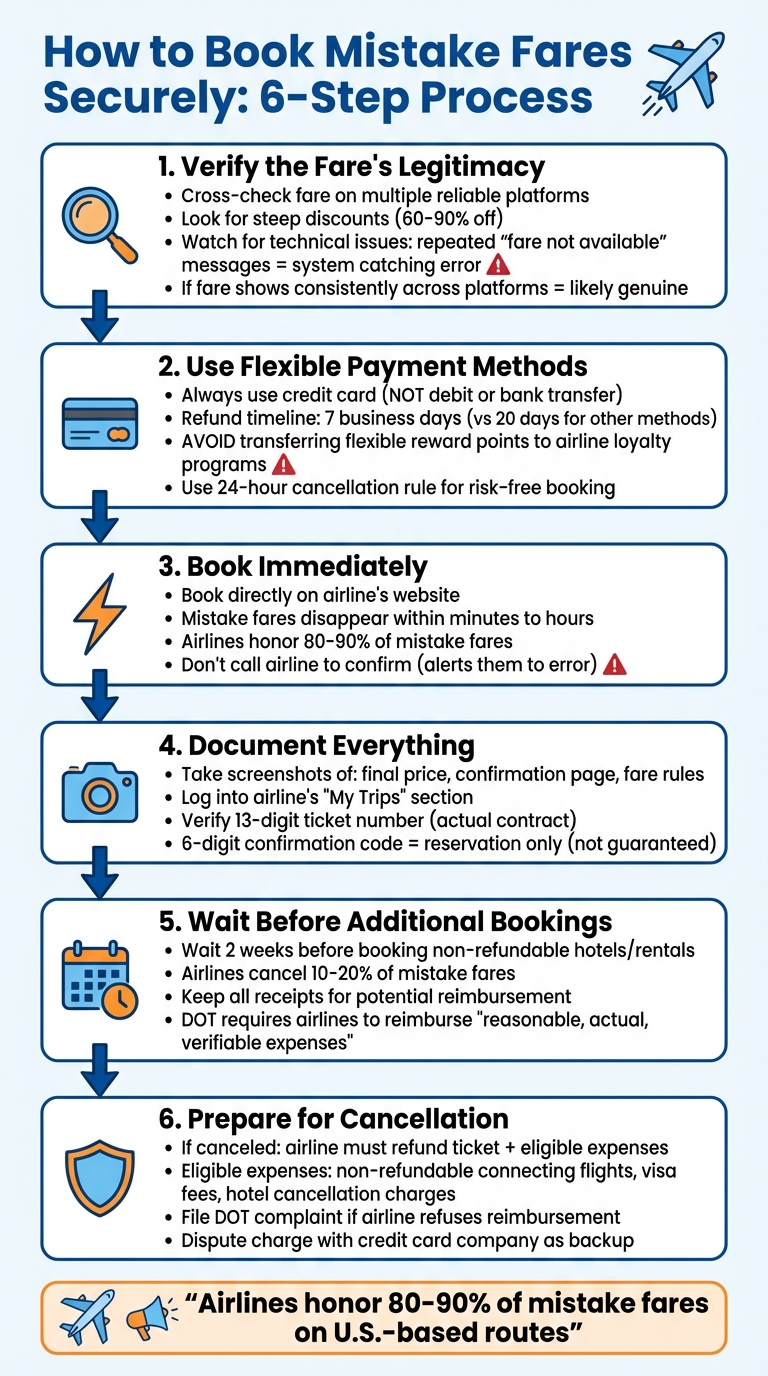
How to Find and Book Mistake Fares: 6-Step Process
Once you've spotted a potential mistake fare, it's crucial to book it carefully. This involves verifying the deal, safeguarding your payment, and being ready for the chance that the airline might cancel.
Verify the Fare's Legitimacy
Start by cross-checking the fare on reliable platforms. A true mistake fare usually stands out with a steep discount. Be cautious of technical issues during checkout, like repeated "fare not available" messages. These can indicate the airline's system is catching the error already. If the fare shows up consistently across multiple platforms, it's likely genuine.
Use Flexible Payment Methods
Opt for a credit card when booking. Credit cards offer stronger protections, including quicker refund timelines - seven business days compared to up to 20 days with other payment methods. This is especially important since airlines cancel roughly 10% to 20% of mistake fares.
Avoid transferring flexible reward points (such as Chase Ultimate Rewards or Amex Membership Rewards) to airline loyalty programs for these bookings. If the fare gets voided, those miles will be stuck in the airline account, with no way to transfer them back. Additionally, the U.S. Department of Transportation's 24-hour rule allows you to cancel any flight booked at least seven days before departure for a full refund within 24 hours. This gives you time to double-check the deal without financial risk.
Prepare for Cancellations
After booking, immediately take screenshots of the final price, confirmation page, and fare rules. Then, log in to the airline's "My Trips" section to confirm you’ve received a 13-digit ticket number. This number represents an actual contract of carriage, unlike the 6-digit confirmation code (PNR), which only indicates a reservation.
Hold off on booking any non-refundable hotels, car rentals, or tours until the standard waiting period has passed. If the airline cancels the fare, they are required to refund your ticket and reimburse "reasonable, actual, and verifiable out-of-pocket expenses" under DOT policy. This includes costs like non-refundable connecting flights, visa fees, and hotel cancellation charges. Keep all receipts for these expenses. Do not call the airline to "confirm" the fare - this alerts their revenue management team to the error and increases the likelihood of cancellation.
"As a matter of prosecutorial discretion, the Enforcement Office will not enforce the requirement of section 399.88... so long as the airline... reimburses all consumers who purchased a mistaken fare ticket for any reasonable, actual, and verifiable out-of-pocket expenses that were made in reliance upon the ticket purchase." - U.S. Department of Transportation
If your fare gets canceled and the airline refuses to refund or reimburse you, file a formal complaint with the DOT's Aviation Consumer Protection Division or dispute the charge with your credit card company. These steps align with the risk management strategies outlined above.
Risks of Mistake Fares and How to Minimize Them
Booking a mistake fare can feel like hitting the jackpot, but it comes with its share of risks. Airlines may cancel these bookings even after confirming them, leaving you to deal with potential financial losses on related travel plans. Acting quickly and staying informed can help you manage these risks while still snagging those incredible deals.
Understanding Cancellation Rates
Airlines cancel about 10% to 20% of mistake fares. While the U.S. Department of Transportation doesn’t require airlines to honor pricing errors, they do mandate refunds for canceled tickets and reimbursement for eligible expenses. These could include nonrefundable connecting flights, visa fees, or hotel cancellation charges. Using a credit card for payment often speeds up the refund process compared to other methods.
Here’s an example: In late 2023, the Air France-KLM Flying Blue loyalty program mistakenly offered transatlantic business-class awards for as little as 1,500 miles. They honored bookings for elite members at 13,500 miles but canceled all others priced below their intended rates.
These statistics highlight the importance of booking wisely and double-checking fare details.
Avoiding Unrealistic Deals
While mistake fares are known for deep discounts, not all deals are worth the risk. Mistake fares typically offer 50% to 90% off standard prices, but the steeper the discount, the more likely the airline is to void the ticket. Deals that seem too good to be true often are.
To reduce potential headaches, book directly with the airline. This approach minimizes delays and simplifies the refund process if something goes wrong.
Taking Quick Action
Timing is everything. Airlines often fix mistake fares within hours - or even minutes. In 2025, Going.com tracked 16 mistake fares, more than double the number from 2024. While this increase provides more chances to score deals, it also means more competition from other savvy travelers.
One smart move? Wait two weeks before finalizing nonrefundable travel plans. This buffer gives airlines time to confirm or cancel your booking. If you’re using flexible reward points, be cautious - they could get tied up if the fare is voided. Always keep receipts for any expenses that might qualify for reimbursement.
| Risk Factor | Impact | Mitigation Strategy |
|---|---|---|
| Airline Cancellation | Loss of flight booking | Wait two weeks before booking additional plans |
| Tied-Up Points | Miles stuck in an account | Transfer points only with a backup plan |
| Nonrefundable Costs | Financial loss | Keep receipts; seek reimbursement for costs |
| Booking Delays | Missed opportunities | Book directly with the airline |
Conclusion
With Tripaway, you can snag mistake fares offering 60% to 90% discounts on flights - making once-unreachable destinations surprisingly affordable. These pricing errors often result from input mistakes, system glitches, or currency conversion issues, but they don’t last long. Most disappear within minutes or hours. While airlines honor about 80% to 90% of these fares, catching them requires the right tools and quick action.
Timing is everything. Searching manually won’t cut it, as mistake fares are limited to specific dates and routes. That’s where automated alerts come in. Tripaway scans millions of flight paths in real time and sends instant notifications when these rare deals pop up. You can even set up airport-specific alerts to focus on the routes that matter most to you.
As Katy Nastro, spokesperson for Going, aptly puts it:
"Mistake fares are like four-leaf clovers ― rare but not unheard of and very lucky."
- Katy Nastro
When you find a mistake fare, book immediately - don’t wait. Use the 24-hour cancellation rule to secure the price while you finalize your travel plans. Always book directly with the airline to ensure your ticket is issued right away. And to avoid unnecessary risks, hold off on booking hotels or other non-refundable reservations for at least two weeks, giving the airline time to confirm your ticket.
Tripaway simplifies the entire process. Whether you stick with the free plan or go premium for unlimited notifications and advanced filters, you’ll stay ahead of the competition. With Tripaway’s real-time alerts, you’ll be ready to grab these rare deals before they’re gone.
FAQs
How can I tell a real mistake fare from a normal sale?
Mistake fares occur when airlines accidentally list tickets at prices 50% or more below their usual rates. These errors can stem from technical issues or human oversight. Imagine snagging an unbelievably low roundtrip ticket - it might feel like a dream, but these deals are very real. However, they’re also fleeting and often unintentional, meaning airlines can cancel or adjust them at any time. To catch these rare opportunities, rely on fare alert websites, join social media groups dedicated to travel deals, and use price tracking apps to act fast.
What should I do if the airline cancels my mistake fare?
If your mistake fare gets canceled, start by checking the airline's policies and the details of your booking. Airlines often cancel these fares when they're identified as pricing errors. Reach out to the airline's customer service team to request either a refund or a rebooking option.
It’s also a good idea to follow fare alert websites and social media groups for advice and updates on similar situations. Keep in mind that while U.S. regulations protect you from price increases after purchase, airlines are still allowed to cancel tickets that were issued by mistake.
When is it safe to book hotels or other nonrefundable plans?
When it comes to booking nonrefundable plans, like hotels, it’s best to hold off until you’re sure the mistake fare is valid. Around 10% of these fares end up being canceled within 72 hours, so waiting for confirmation from the airline or provider can save you from unnecessary hassle. If you need to book right away, keep in mind that most U.S. bookings come with a 24-hour cancellation policy, giving you a short window to cancel and get a full refund if needed.