Best Days to Book Flights for Maximum Savings
Best Days to Book Flights for Maximum Savings
Want to save on flights? Timing is everything. Flight prices fluctuate frequently, and booking on certain days can help you cut costs significantly. Here's the key takeaway:
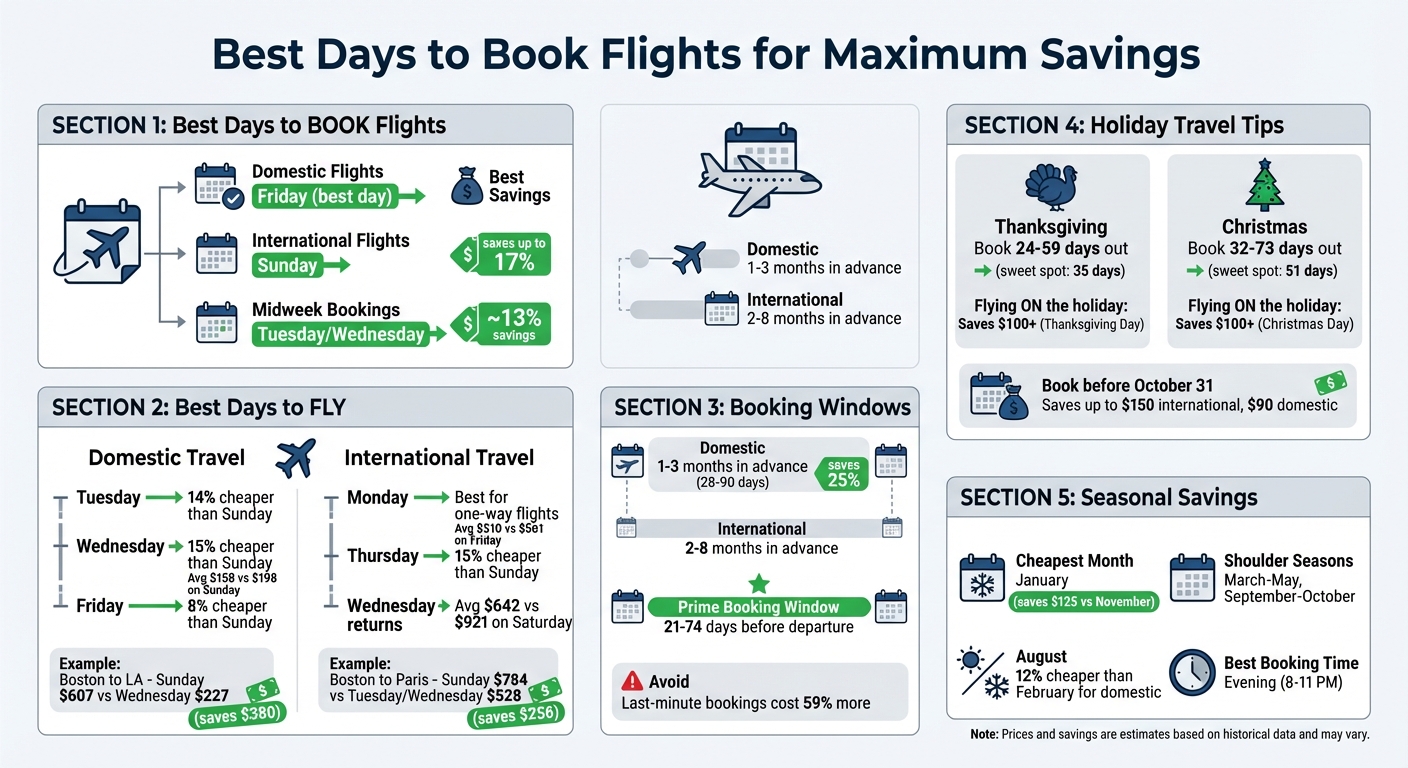
- Domestic Flights: Book on Friday for the lowest prices.
- International Flights: Book on Sunday to save up to 17%.
- Best Days to Fly: Midweek departures (Tuesday or Wednesday) are cheapest, saving you around 13% on domestic and 15% on international routes.
- Booking Windows: For domestic trips, book 1–3 months in advance. For international travel, aim for 2–8 months before departure.
- Flying on Holidays: Traveling on Thanksgiving or Christmas Day can save you over $100.
To maximize savings, use tools like flight deal alerts, book during off-peak hours (evenings), and target shoulder seasons (spring and fall). Smart planning can make a big difference in your travel budget.
Best Days to Book and Fly for Cheapest Flight Prices
When to Book a Flight for the Best Price (it’s not Tuesday)
Best Days of the Week to Book Flights
When you finally hit "purchase", the impact on your wallet can vary significantly depending on the day. Recent data highlights that Friday is now the most budget-friendly day to book domestic flights in 2026. For international travel, Sunday takes the crown, helping travelers save up to 17% compared to other booking days.
Friday: The Domestic Flight Sweet Spot
If you're booking domestic flights, Friday has become the go-to day for snagging lower fares. This shift is largely due to a drop in corporate bookings toward the end of the week, leaving more affordable tickets for leisure travelers. Mark Peikert, Editor at Time Out, explains:
"largely tied to changing business travel habits, with fewer corporate travelers booking at the end of the week, leaving more lower-priced inventory available".
By timing your domestic bookings for Friday, you can take advantage of discounted fares that might otherwise go unnoticed.
Midweek Magic: Tuesday and Wednesday
While Tuesday and Wednesday are well-known as the cheapest days to fly, they also offer great opportunities for booking tickets. Airlines often lower prices midweek to fill seats, as demand tends to dip during these days. For domestic routes, midweek flights cost around 13% less than weekend departures, which can mean savings of about $100. If you have flexibility in your schedule, midweek bookings are a reliable way to save.
Sunday and Thursday: International Savings Strategy
For international travel, Sunday consistently provides the best deals, with fares averaging 17% lower than on Mondays or Fridays. Additionally, planning your departure for a Thursday instead of a Sunday can save you an extra 15%. Combining these strategies - booking on Sunday and flying on Thursday - can maximize your savings on international trips.
| Travel Type | Best Day to Book | Potential Booking Savings |
|---|---|---|
| Domestic | Friday | Varies (due to lower demand) |
| International | Sunday | Up to 17% |
| Midweek (Both) | Tuesday/Wednesday | ~13% |
Cheapest Days of the Week to Fly
Choosing the right day to fly can make a big difference in airfare costs. While booking on certain days helps, the day you actually depart plays an even bigger role in saving money. For instance, flying on a Wednesday instead of a Sunday could save you over $100. Let’s dive into which days offer the biggest savings.
Friday for Domestic Departures
If you're flying within the U.S., Friday has become a surprisingly affordable departure day in 2026. According to the Expedia Air Hacks Report, "Friday takes off as the new cheapest day to depart and book". Compared to Sundays, Friday departures can save you up to 8%. This trend is partly due to fewer corporate travelers booking flights on Fridays, leaving more budget-friendly seats for leisure travelers.
Tuesday and Wednesday for Domestic Travel
Tuesday and Wednesday continue to dominate as the best days for saving on domestic flights. In July 2025, KAYAK data revealed that average one-way domestic fares were $158 on Wednesdays, compared to $198 on Sundays - a $40 difference per ticket. Tuesday departures are also a great choice, costing 14% less than Sunday flights. Similarly, Wednesday flights can save travelers 15% on average. For example, in September 2025, a nonstop flight from Boston to Los Angeles cost $607 on a Sunday but just $227 on a Wednesday - a massive $380 savings.
Monday and Wednesday for International Travel
International travelers have their own sweet spots for savings. Monday is the best day for low-cost one-way international flights, averaging $510 compared to $561 on Fridays. Thursday departures also shine, offering savings of about 15% compared to Sundays. The biggest savings often come with return flights - Wednesday returns average $642, while Saturday returns jump to $921. Take Boston to Paris as an example: in September 2025, Sunday departures cost $784, while Tuesday or Wednesday departures were just $528 - a $256 difference.
As Kyle Potter, Executive Editor at Thrifty Traveler, points out:
"What matters more is when you actually get on the plane – not when you buy your tickets".
When to Book Flights for Maximum Savings
Getting the timing right for booking flights can make a big difference in your travel budget. If you book too early or too late, you might end up paying more than necessary. Below, you'll find tips on the best booking windows for holiday travel, general domestic and international flights, and even some insights on flying on the holiday itself.
Booking Windows for Holiday Travel
When it comes to holiday travel, timing is everything. For Thanksgiving, aim to book your tickets 24–59 days before your trip, with the sweet spot being around 35 days out. For Christmas and winter holidays, the best deals are typically found 32–73 days in advance, with prices tending to drop around 51 days before departure.
If you're planning international travel, booking before October 31 can save you up to $150 on international flights and $90 on domestic routes.
Melanie Fish, Head of Public Relations at Expedia Group Brands, has this to say about holiday bookings:
"It's easy to stress about when to book on your holiday flights, and while the data shows there's good reason to lock them in before Halloween, there are also a suite of tools that make hitting 'book' much less scary".
Booking Timelines for Domestic and International Flights
For domestic flights, the best time to book is 1–3 months before departure (28–90 days). Booking within this window can save you about 25% compared to waiting until the last minute. On the other hand, booking way too early - 7.5 to 10 months in advance - can cost you 36% more, and leaving it until the final week could drive prices up by as much as 59%.
International flights require a bit more planning. The ideal booking window is 2 to 8 months before your trip. While booking 18–29 days before departure might save you up to 17% compared to booking three months out, this approach comes with risks, as availability can be limited for international routes.
Flying on the Holiday Itself
If you're flexible, flying on the holiday itself can lead to significant savings. For instance, Thanksgiving Day flights are often much cheaper than traveling on the busy Wednesday before. Similarly, flying on Christmas Eve or Christmas Day can save you over $100 compared to traveling during the high-demand period of December 20–26. Most travelers avoid flying on the holiday itself to spend more time with family, so this lower demand results in better deals for those willing to travel during these times.
sbb-itb-7ea9975
Using Tripaway for Flight Deal Alerts

Keeping tabs on flight prices across multiple routes can feel like a never-ending task. That’s where Tripaway’s flight deal alert system steps in. By scanning millions of flight paths, it pinpoints major price drops and notifies you instantly. Whether you’re planning a specific trip or just waiting for the right deal to pop up, these automated alerts save you from the hassle of constant price-checking. Here’s how Tripaway’s plans can align with your travel goals.
Tripaway's Free and Premium Plans
Tripaway caters to travelers with both Free and Premium plans, each designed for different needs.
The Free plan delivers daily newsletters featuring domestic flight deals from a single departure airport of your choice. It’s a solid option if you mostly fly within the U.S. and stick to one home airport.
The Premium plan, on the other hand, opens the door to international deals and rare mistake fares - those pricing errors that can save you hundreds or even thousands of dollars. With Premium, you can monitor up to four departure airports and track up to ten "dream destinations", making it ideal for those juggling multiple travel plans. Plus, you get advanced filters and priority alerts, ensuring you’re among the first to grab the best deals when they surface.
Setting Up Deal Alerts
Creating alerts is straightforward. You can select up to four departure airports and choose specific routes and dates to watch - or go for the "Any dates" option to track price drops over a flexible 3–6 month period. This is especially handy if your travel schedule is flexible.
Once your preferences are set, Tripaway keeps you updated with notifications via email or push alerts whenever there’s a significant price change on your tracked routes. For time-sensitive opportunities like mistake fares, enabling push notifications on your phone ensures you can act quickly and book before prices bounce back.
Best Times of Day and Seasons to Book Flights
Evening Bookings
When it comes to snagging better airfare deals, the time of day you book can make a difference. Booking flights in the evening, typically between 8:00 PM and 11:00 PM local time, often leads to lower prices - especially on midweek days. Morning prices, on the other hand, tend to be higher because airlines cater to business travelers who are less concerned about finding discounts. For international long-haul flights, consider checking fares during off-peak hours in the airline's home country. This can sometimes reveal cheaper options. These simple timing tricks can complement other strategies for saving on airfare.
Low-Demand Months and Shoulder Seasons
The time of year is just as important as the time of day when it comes to saving on flights. For U.S. travelers, January is a standout month, offering average savings of $125 compared to November, which is the most expensive month for airfare. February is also a quieter travel period, with fewer passengers taking to the skies. Interestingly, domestic travel in August can be around 12% cheaper than in February. If you're looking for a balance between cost and convenience, shoulder seasons - March through May and September through October - are ideal. During these months, flights are cheaper, and airports are less crowded compared to the peak summer and holiday travel periods.
Booking Adjustments During Off-Peak Seasons
To maximize savings, consider adjusting your travel dates to align with off-peak periods. For example, shifting your trip by just a day or two during January or February could cut airfare by 15% to 20%. Additionally, airlines frequently lower prices on Tuesdays and Wednesdays to fill seats, as fewer business travelers and vacationers are flying on these days. Combining these strategies - like booking in the evening, targeting shoulder seasons, and traveling midweek - can help you secure the best possible airfare deals.
Conclusion
Scoring budget-friendly flights comes down to smart timing, careful planning, and the right tools. As mentioned earlier, booking on Sundays can save up to 17% on international flights, while choosing midweek departures can cut domestic airfare by about 17% compared to Sunday flights. To get the best deals, aim to book domestic flights 1 to 3 months in advance and international trips 18 to 29 days before departure. The sweet spot for finding the lowest fares, known as the Prime Booking Window, falls between 21 and 74 days before your trip. On the flip side, last-minute bookings can cost you an average of 59% more.
"The best hack is to let technology find the best value. Set up Price Alerts, rely on Price Drop Protection to swoop in and reimburse you if prices drop".
Using tools like Tripaway can take the guesswork out of flight hunting. With deal alerts, the app notifies you of significant fare drops, removing the need for constant monitoring. It scans millions of flight routes to find mistake fares and flash sales, which can save you anywhere from 40% to 90% on airfare. Whether you stick with the free version or upgrade to a premium plan, you can customize alerts for your home airport and get instant push notifications when deals pop up.
FAQs
Do flight prices really drop on Fridays and Sundays every week?
Flight prices tend to drop over the weekend, particularly on Saturdays and Sundays, as most leisure travelers make their bookings then. Another great day to snag cheaper flights is Tuesday, thanks to the typically lower midweek demand. Monitoring booking trends can help you save even more.
What should I do if my trip dates aren’t flexible?
If you know your travel dates, aim to book domestic flights 1 to 3 months in advance to snag better deals. Keep an eye on fare alerts and track price changes, as airlines frequently adjust prices depending on demand and availability. This strategy can help you lock in the best fares, even if your schedule isn’t flexible.
How can I use Tripaway alerts to catch price drops fast?
To track flight prices with Tripaway, start by connecting it to Google Flights. First, log into your Google account, then input your trip details, including routes and dates. Enable price alerts for the flights you're interested in, and you'll receive instant notifications whenever prices drop. This way, you can act fast to snag the best deals and save on your travel expenses.