How Flight Alerts Help Find Flash Sales
How Flight Alerts Help Find Flash Sales
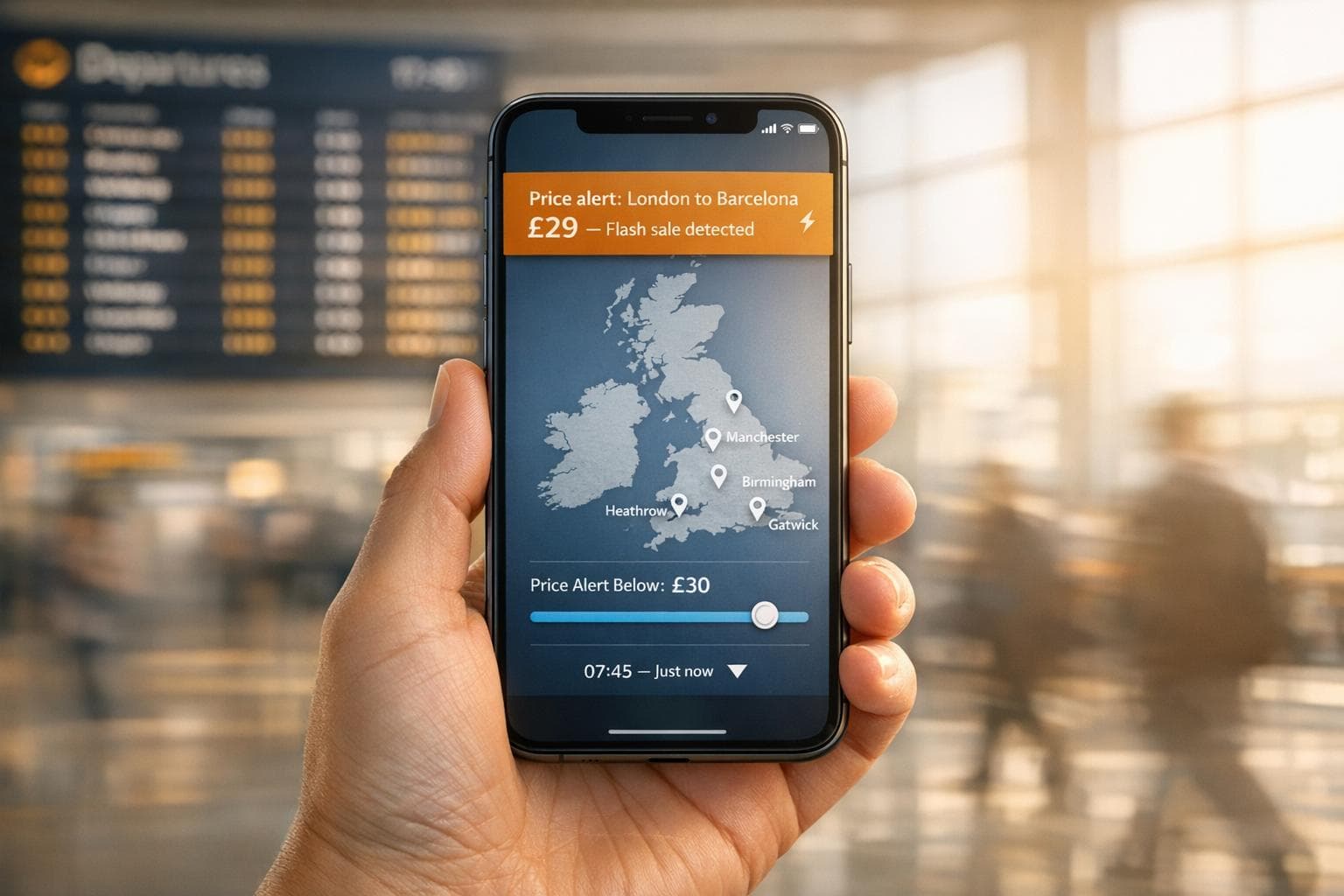
Flight alerts make it easier to grab flash sales on flights, helping you save money without constant price monitoring. These alerts notify you instantly when fares drop to your desired price or when airlines launch short-term deals to fill empty seats. Here's how they work:
- Set preferences: Choose routes, airports, budgets, and travel dates.
- Receive notifications: Get updates via app, email, or SMS when prices match your criteria.
- Act fast: Flash sales are short-lived, so quick booking is crucial.
For UK travellers, tools like Tripaway are especially helpful. They monitor multiple airports (e.g., Heathrow, Gatwick, Manchester) and flight routes in real time, spotting discounts of up to 90%. Premium users gain access to faster alerts, mistake fares, and tailored filters for even better deals.
Want to save on flights? Set up alerts, track multiple airports, and be ready to book when the right deal appears.
Where You’ll Find the Best Flight Deals in 2026
sbb-itb-7ea9975
How Flight Alerts Catch Flash Sales
Flight alerts make fare tracking easier and are essential for snapping up flash sale deals before they disappear.
What Are Flight Alerts?
Flight alerts are automated notifications that inform you when airfare prices drop. You simply set your preferences - like flights from London to Barcelona or Manchester to New York - and the system does the rest. It tracks prices and sends you instant notifications via app, email, or SMS when fares reach your target or drop significantly.
The biggest benefit? Speed. Airlines adjust their prices multiple times each day based on seat availability and competition. Flight alerts work in real time, notifying you the moment a flash sale starts - long before the best deals are snapped up. By using these alerts, you're always a step ahead in spotting time-sensitive bargains.
How Flash Sales Work
Flash sales are short-lived promotions airlines use to sell unsold seats quickly. These deals often last just a few hours or until a set number of tickets are sold. Airlines organise seats into "fare buckets." When they open a lower-priced bucket to boost demand, prices drop sharply. But once that bucket sells out, prices shoot back up.
This makes flash sales all about being prepared, not lucky. The booking window can be incredibly tight - sometimes just minutes, especially for mistake fares caused by errors like currency miscalculations or technical glitches. To grab these fleeting deals, constant price monitoring is crucial.
Real-Time Price Monitoring Explained
Real-time price monitoring is what sets effective flight alerts apart from outdated systems. These advanced tools continuously scan airline inventories and aggregator data to detect price changes as they happen. Many services check fares multiple times a day, while some offer live updates to reflect inventory shifts.
This constant tracking is vital because airlines rely on Revenue Management Systems (RMS) to adjust fares based on factors like booking speed, remaining seats, and competitor pricing. As Oliver Hayes, Senior Editor & Fare Strategy Specialist, explains:
The algorithm doesn't 'care' about you - it adjusts fares.
Real-time alerts catch these rapid changes, giving you the chance to book before the deal vanishes.
For UK travellers, these systems can monitor multiple departure points - like Heathrow, Gatwick, and Stansted - at the same time. This means you can spot flash sales that vary by airport. Notifications are tailored to your preferences, ensuring you're alerted only to deals that genuinely match your needs.
Setting Up Flight Alerts on Tripaway
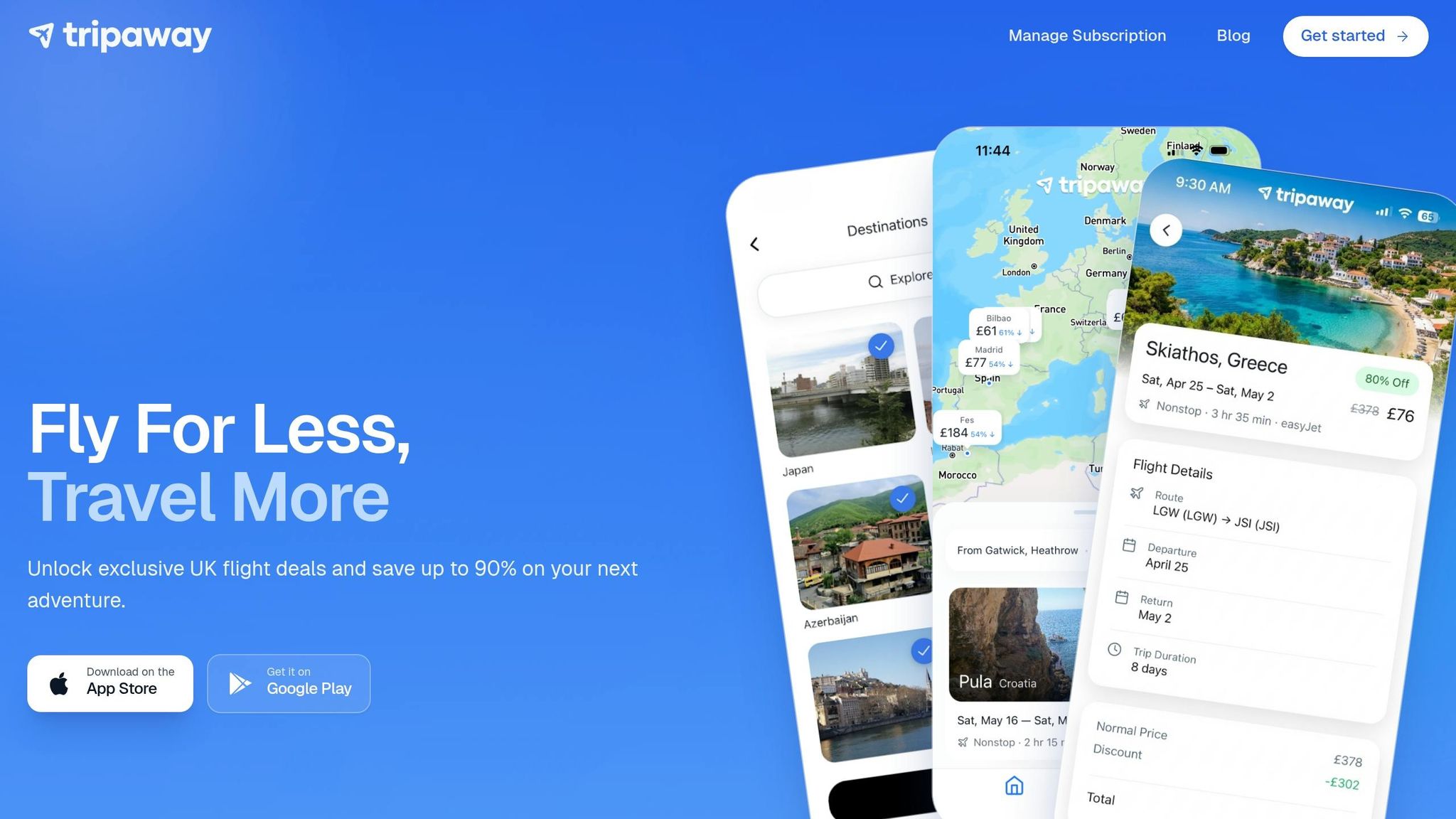
For UK travellers keen on snagging flash sales before they vanish, Tripaway makes it simple. Its intuitive design ensures a smooth journey from setting up alerts to receiving real-time notifications about travel deals.
Downloading and Using the Tripaway App
You can find Tripaway on both the Apple App Store and Google Play Store. Before downloading, make sure your device meets the app's system requirements. Once installed, setting up is straightforward: choose your home airport, pick your dream destinations, adjust alert preferences, and you're ready to start receiving personalised deal notifications directly in your feed.
Selecting UK Airports and Destinations
To receive the most relevant deals, head to the app settings and pick your preferred UK departure airports. Tripaway supports major hubs like London Heathrow (LHR), London Gatwick (LGW), Manchester (MAN), and Edinburgh (EDI), as well as other airports across the UK and British Crown Dependencies. You can select multiple airports to reflect your travel flexibility, which can be handy since flight prices often vary depending on the departure point. After choosing your home airport, define your "dream destinations" to ensure alerts focus on places you truly want to visit, avoiding unnecessary notifications.
Setting Up Filters for Flash Sale Alerts
Tripaway lets you fine-tune your alerts by applying filters. Choose options like nonstop flights, specific travel dates, and a "buy-under" price cap (e.g., under £89). These settings help you focus on deals that match your needs. The app tracks offers from quality airlines, skipping budget carriers altogether. As Oliver Bennett, Senior SEO Travel Editor, explains:
The best fare alert is the one you will actually act on. Set a price threshold that feels genuinely bookable.
For those seeking even more savings, a premium membership unlocks exclusive deals with discounts of up to 90%. With these customisations in place, you'll be ready to jump on flash sales as soon as they pop up.
Getting More Flash Sales with Custom Alerts
Once you've got the basics set up, tweaking your alert settings can help you snag more flash sales. The trick is to broaden your search criteria while avoiding overwhelming notifications.
Monitoring Multiple UK Airports
Keeping an eye on multiple departure airports can help you spot more flash sales. Airlines often release discounted tickets at specific airports, meaning a flash sale might pop up for Manchester but not Heathrow on the same day. A "route ladder" strategy works well: start with your preferred airport pair, then add two or three nearby alternatives. For instance, you could monitor London to Barcelona, London to Girona, and Manchester to Barcelona simultaneously.
If you're based in London, set alerts for Heathrow, Gatwick, Stansted, Luton, and Southend. For those in other regions, airports like Manchester, Birmingham, Bristol, Edinburgh, and Glasgow are worth tracking. However, before booking a cheaper flight from a less convenient airport, factor in local transport costs - a £35 airfare saving can quickly vanish if your train ticket costs £40. Expanding your travel dates is another way to catch more deals.
Using Flexible Dates and Travel Periods
Flexible date alerts (±3 to ±14 days) are a great way to uncover cheaper fares on nearby dates. Midweek departures or shoulder season travel can often unlock even better bargains, sometimes reducing fares by as much as £70. Advanced flexible-date alerts can help you save between 10% and 40% on popular routes.
Checking One-Way and Multi-City Tickets
Beyond flexible dates, exploring different ticket types can also boost your chances of finding deals. Instead of relying solely on return tickets, set alerts for one-way flights. These can reveal flash sales that return ticket searches might miss. In some cases, combining two separate one-way tickets can be cheaper than booking a return fare.
Another option is open-jaw tickets, where you arrive in one city and depart from another. These can sometimes provide better value for multi-city trips. To make the most of this, set up alerts for each segment of your journey to catch price drops on individual legs. When a one-way alert triggers, calculate the total trip cost, including baggage fees, to confirm the savings.
Acting Fast When You Receive an Alert
When a real-time alert notifies you of a flash sale, acting quickly is the key to grabbing those savings. Flash sales are fleeting, often lasting just minutes. Airlines sell seats in pricing tiers, so a delay in booking could mean missing out on the cheapest fares. With time working against you, here’s how to secure your deal without hesitation.
Checking the Deal Details and Conditions
Before locking in your booking, it’s smart to double-check the deal. Open an incognito browser window to confirm the fare and ensure the total cost - including any fees - fits your budget. Look closely at the fine print for details like cancellation policies, change fees, and minimum stay requirements, as discounted tickets often come with strict conditions. Taking screenshots of the alert and the final booking page can also come in handy if you need to make a price-match claim or dispute with the airline.
Use the Three-Question Test to decide quickly:
- Is the price below your target?
- Does the itinerary suit your needs, even with added fees?
- Is waiting riskier than booking now in case the price goes up?
If the answers are all yes, book immediately. Once you’ve confirmed the deal, proceed to checkout without delay.
Booking Through Tripaway
Tripaway’s direct links make the booking process faster. Aim to complete your transaction within five minutes by using browser autofill and securely saved payment methods. Keep your passport, payment details, and travel dates ready, and enable Two-Factor Authentication for a secure and speedy checkout. As Avery Collins, Senior Travel SEO Editor, puts it:
Speed is the point of fare alerts, and hesitation is the most expensive habit in the game.
Upgrading to Tripaway Premium for Faster Alerts
While Tripaway’s free plan provides reliable deal notifications, upgrading to Tripaway Premium gives you an edge with real-time alerts instead of delayed summaries - essential when flash sales vanish within minutes. Premium also allows you to fine-tune filters for cabin class, connection times, or baggage preferences. Push notifications ensure you’re instantly alerted, giving you the best chance to act on those fleeting deals. With Tripaway Premium, you can maximise every opportunity to secure the best fares.
Tripaway Free vs Premium Plans
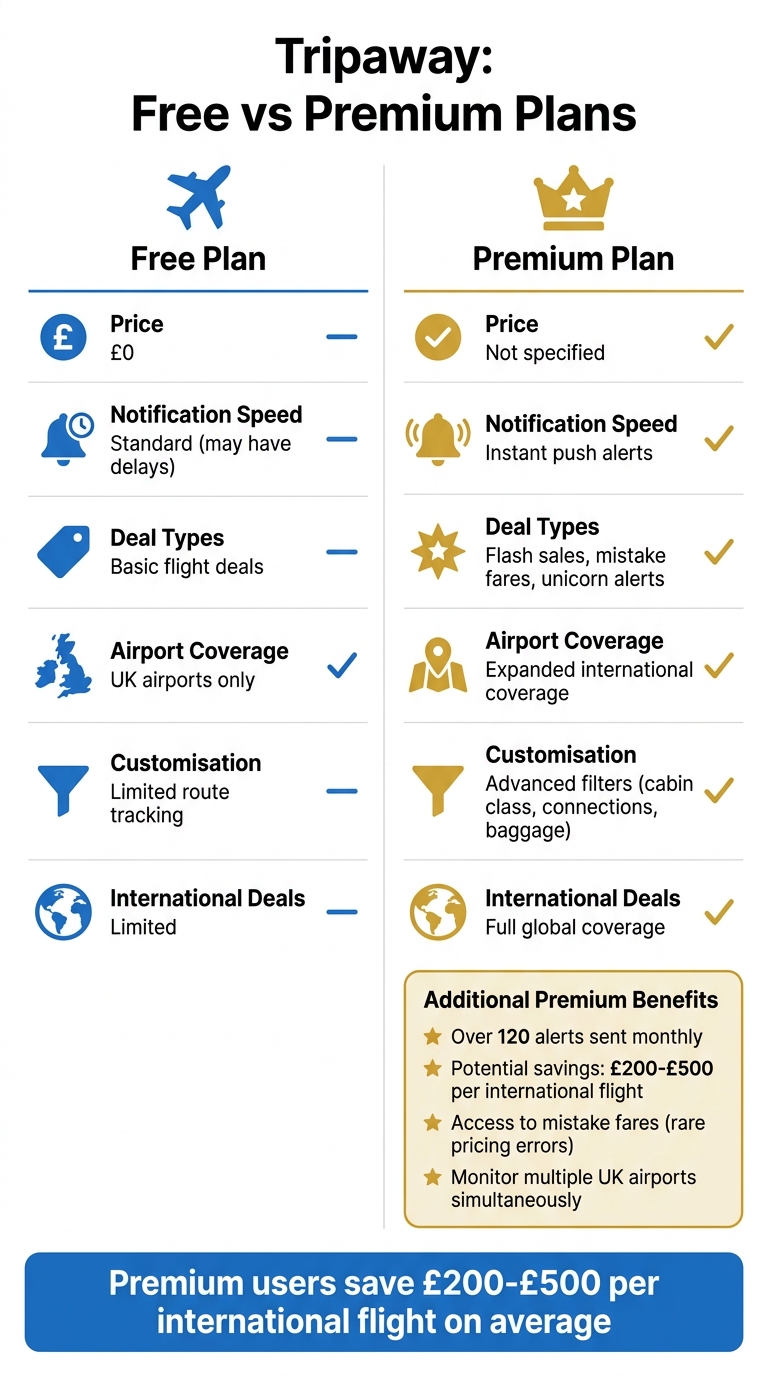
Tripaway Free vs Premium Plan Comparison for UK Flight Alerts
Once you've set up your custom alerts, picking the right plan ensures you won't miss those fleeting travel deals. With Tripaway, you can choose between the Free and Premium plans, depending on how often you travel and your need for instant flash sale alerts. While both options provide flight alerts, the Premium plan offers added perks that cater to frequent travellers looking to maximise their savings.
Free Plan vs Premium Plan: Key Differences
The Free Plan is a great starting point, especially for those new to flight alerts or who only travel occasionally. It provides standard UK flight alerts and basic route tracking. However, notifications might arrive with some delay, and mistake fares - those rare pricing errors that can save you hundreds - aren't included.
On the other hand, the Premium Plan is designed for more frequent travellers. Subscribers receive instant push notifications, which is crucial since many deals disappear within minutes. Premium members also gain access to mistake fares and unicorn alerts, ensuring they can grab those time-sensitive bargains. Plus, the Premium plan enables advanced filtering options, allowing users to tailor alerts based on fare class (like premium economy, business, or first class), connection times, and baggage preferences. It also expands coverage to international destinations and lets you monitor multiple UK airports simultaneously, increasing the chances of finding the best deals.
Here's a quick comparison:
| Feature | Free Plan | Premium Plan |
|---|---|---|
| Price | £0 | Not specified |
| Notification Speed | Standard (may have delays) | Instant push alerts |
| Deal Types | Basic flight deals | Flash sales, mistake fares, unicorn alerts |
| Airport Coverage | UK airports only | Expanded international coverage |
| Customisation | Limited route tracking | Advanced filters (cabin class, connections, baggage) |
| International Deals | Limited | Full global coverage |
Premium users often save between £200 and £500 per international flight, with over 120 alerts sent out each month. As Scott Keyes, founder of Going, explains:
Mistake fares... can save hundreds on both domestic and international routes.
For those who travel more than once or twice a year, the Premium plan can quickly pay for itself with just one well-timed booking.
Conclusion
Flight alerts have transformed how UK travellers snag flash sales, taking the hassle out of constant manual searches. With real-time monitoring, these tools continuously scan fares and send instant notifications when prices drop - a game-changer, especially since deals can disappear within minutes or hours.
By setting specific price thresholds and tracking flights from multiple UK airports, you can create a system that works tirelessly to spot those fleeting bargains. The key is to act quickly when alerts come through. Having clear price limits in place ensures you're ready to book immediately.
These methods make it easier to catch rare deals without missing out. Tripaway simplifies the process by monitoring millions of flight routes to detect hidden discounts and flash sales, helping you save anywhere from 40% to 90% on airfare. Whether you opt for the Free Plan for occasional trips or upgrade to Premium for instant alerts and access to mistake fares, you'll have the tools to secure the deals others overlook.
As Oliver Bennett, Senior SEO Travel Editor, advises:
The best fare alert is the one you will actually act on. Set a price threshold that feels genuinely bookable, not just 'interesting,' and track fewer routes more carefully.
Make sure to enable push notifications and focus on the routes that matter most to you. That way, you'll be ready to grab flash sales the moment they appear.
FAQs
How do I set a realistic price threshold for alerts?
Setting a realistic price threshold starts with researching the typical fare range for your route. Take your budget into account and use tools like historical fare data and seasonal trends to determine what qualifies as a real discount. Be cautious - setting your threshold too low might mean you overlook good deals, while setting it too high could result in overpaying. The key is to find a balance that matches current market conditions while aligning with your travel plans.
Which UK airports should I track to catch more flash sales?
To snag more flash sales, keep an eye on major UK airports such as London Heathrow, Gatwick, Stansted, Luton, and Manchester. These key hubs frequently appear in last-minute deal notifications and flight price tracking, giving you better opportunities to land discounted fares.
What should I check before booking when an alert pops up?
Before you book, make sure the fare is genuinely a good deal and not just a short-term price drop. Compare it with the typical price range to see if it’s actually lower and fits your travel plans. Don’t forget to check the airline’s policies, baggage allowances, and any possible extra charges - these can add up quickly. Taking the time to verify these details helps ensure the deal works well for your needs.