Last-Minute vs. Early Booking: Which Saves More?

Last-Minute vs. Early Booking: Which Saves More?
Booking early saves money for most travellers, especially during busy seasons or for international trips. You’ll benefit from lower prices, better flight options, and peace of mind. Domestic flights booked 1–3 months ahead can save 20–25%, while international trips are best secured 2–8 months in advance.
Last-minute bookings can work, but they’re risky. While prices may drop 48–72 hours before departure on less popular routes, fares often spike by 25% or more within three weeks of a flight, especially during peak travel times. This strategy suits flexible travellers willing to gamble on availability and cost.
Key Takeaways:
- Early Booking: Ideal for holidays, peak travel periods, and international flights. Saves 20–40%.
- Last-Minute Booking: Works for spontaneous trips or off-peak times but often costs more.
- Best Window: Domestic: 15–45 days; International: 30–60 days before departure.
- Tip: Use flight tracking tools like Tripaway to spot rare deals.
| Feature | Early Booking | Last-Minute Booking |
|---|---|---|
| Savings | 20–25% lower than last-minute | Often 25–50% higher |
| Risk | Low | High |
| Flexibility | High | Low |
| Best For | Popular routes, peak seasons | Spontaneous, less popular routes |
| Price Trend | Stable | Increasing (<21 days) |
For most, booking early is the safer, cost-effective choice. But if you’re flexible, last-minute deals might occasionally work.
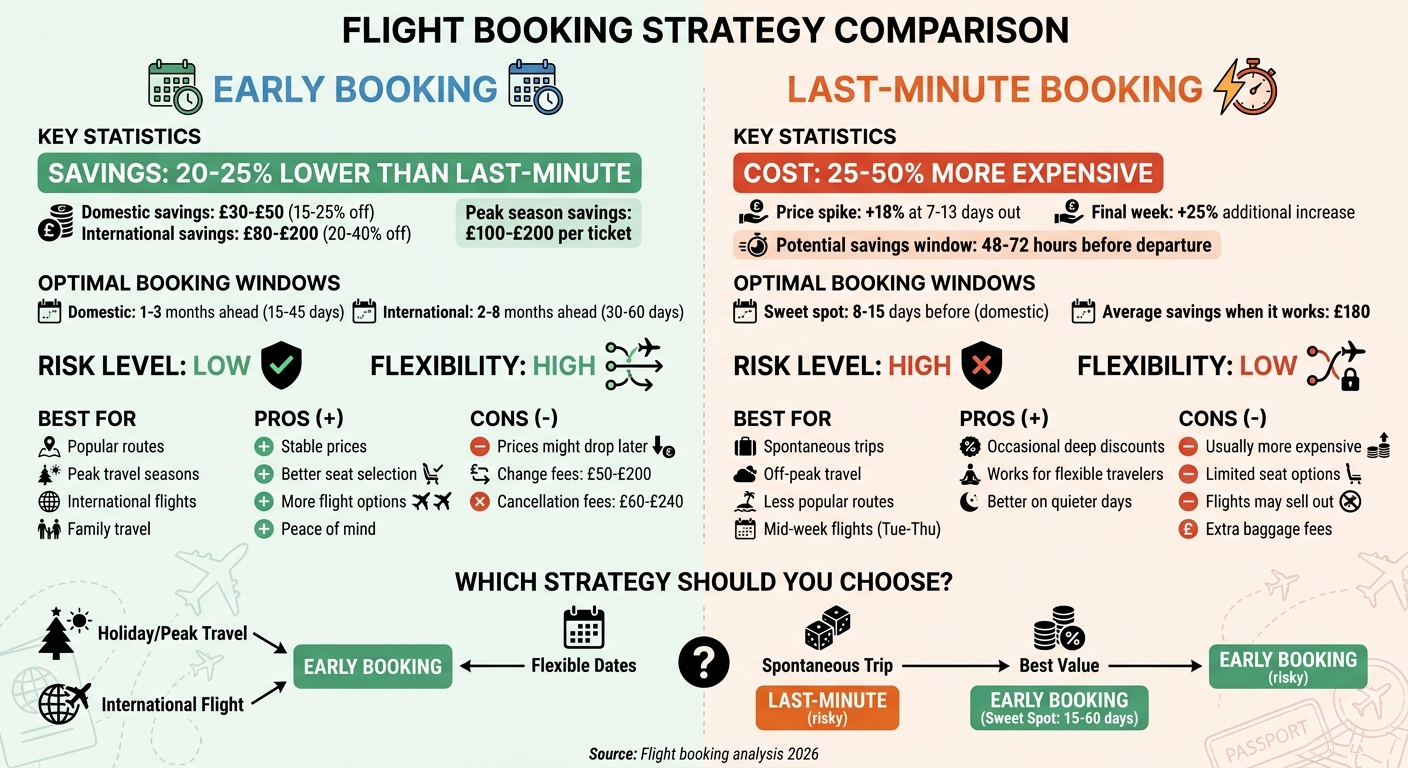
Early vs Last-Minute Flight Booking: Savings Comparison Chart
Early Booking: Pros and Cons
Benefits of Booking in Advance
Booking your flights early can lock in prices before airlines adjust them closer to departure dates. For UK travellers, this can translate into noticeable savings. For instance, domestic routes like London to Edinburgh booked 4–8 weeks in advance can save travellers between 15% and 25% - roughly £30 to £50. On international routes such as London to Barcelona, planning 2–4 months ahead might cut costs by 20% to 40%, equating to savings of £80 to £200.
Another perk of early booking is the wider variety of options available. You’ll have access to more convenient departure times, direct flights, and the ability to secure seats together - an essential factor for families. This is especially important during peak seasons like Christmas (20 December to 5 January) and the summer holidays (July–August) when flights fill up quickly. Travellers who book popular routes 8–12 weeks ahead often save £100 to £200 per ticket while also enjoying better flight choices. In contrast, last-minute bookers may face limited options and steep fare increases of 30% to 50%.
Airlines typically release tickets up to 330 days in advance, giving early planners a head start. This is particularly advantageous during busy periods like UK half-term breaks or bank holidays. Families booking three months ahead can avoid price surges of around £300 and secure child-friendly flight times and seating arrangements.
While these benefits are appealing, there are potential downsides to consider.
Downsides of Booking Early
One major risk of early booking is the chance that ticket prices might drop after you’ve made your purchase. Airlines use dynamic pricing algorithms that adjust fares based on demand. For example, a London to Paris ticket bought for £150 in January might drop to £90 by March if demand weakens. Additionally, mistake fares or flash sales can offer discounts of 40% to 90%, often appearing shortly after tickets are released. Tools like Tripaway can help uncover these deals, but early bookers may miss out.
Another drawback is reduced flexibility. Advance fares often come with strict fees for changes or cancellations. These fees can range from £50 to £200 for changes and £60 to £240 for cancellations. For instance, British Airways charges £99 for changes on short-haul economy tickets booked in advance. While flexible fares allow for changes, they typically cost 20% to 50% more upfront, adding around £50 to £100 to the ticket price. For travellers with uncertain plans, paying this premium might be worth it, but it does increase initial costs.
Weighing these challenges against the benefits of last-minute booking strategies can help you make the best decision for your travel needs.
sbb-itb-7ea9975
Last-Minute Booking: Pros and Cons
When Last-Minute Bookings Save Money
Booking at the last minute can sometimes lead to surprising savings, but it requires a bit of strategy. Airlines often drop prices 48 to 72 hours before a flight to fill empty seats, especially on less popular routes, mid-week flights, or during off-peak travel periods.
For domestic flights, the ideal window for last-minute savings seems to fall between 8 and 15 days before departure, with potential savings averaging £180. Flying on quieter days - like Tuesdays, Wednesdays, or Thursdays - can also help you land better deals. For instance, booking on a Friday instead of a Sunday could save you around 14% on domestic flights and 8% on international ones.
This approach works well for travellers who are spontaneous and flexible with their plans. However, while these savings are tempting, they come with a fair share of risks.
Risks of Waiting to Book
The downside to last-minute booking is that it can often cost you more than you save. Flight prices tend to rise sharply, increasing by 18% between 7 and 13 days before departure, and by another 25% in the final week. Airlines use advanced pricing systems to target last-minute travellers - such as businesspeople or those dealing with emergencies - who are often willing to pay a premium.
"Airlines know that people searching last minute are often desperate... It's not paranoia, it's profit." - Elara Winthrop, Travel Writer
In addition to higher fares, waiting can lead to other complications. Popular flights may sell out, leaving fewer options or forcing you to settle for inconvenient routes with long layovers. Furthermore, remaining seats might come with extra fees for seat selection, and costs for checked baggage or carry-ons often rise if paid at the airport.
During peak travel times - like summer holidays, Christmas, or bank holidays - last-minute strategies rarely work. Prices can skyrocket regardless of how late you book, and availability becomes scarce. For UK travellers, this is especially true during school breaks or major events, where waiting could mean both higher costs and fewer choices.
How to find cheap flights LAST MINUTE (5 easy tips)
Early vs. Last-Minute: Side-by-Side Comparison
Now that we've looked at both early and last-minute booking strategies, let's compare them directly. Neither option is a one-size-fits-all solution - it all boils down to your travel plans, how flexible you are, and your comfort with taking risks.
For most travellers, early booking is the safer route. If you're booking domestic flights, locking in your tickets 1–3 months ahead can save you 20–25% compared to waiting until the last minute. For international trips, the sweet spot is 2–8 months in advance. This timeframe - often called the "Goldilocks Window" - not only offers better prices but also gives you the advantage of more seat options and peace of mind. This is especially handy during busy travel times like summer holidays or Christmas.
In contrast, last-minute booking is more of a gamble. While you might occasionally snag a deal on less popular routes or mid-week flights, prices generally spike by 25% or more in the final week before departure. Airlines know that last-minute travellers, such as business flyers or those dealing with emergencies, are often willing to pay a premium.
"Banking on a last-minute deal is like playing roulette. The odds may be in your favour, but the house wins either way." - Jack's Flight Club
Comparison Table: Which Strategy Wins?
| Feature | Early Booking (Goldilocks Window) | Last-Minute Booking |
|---|---|---|
| Average Savings | 20–25% compared to last-minute | Typically 25–50% more expensive |
| Risk Level | Low; secures seat and stable price | High; prices spike or seats sell out |
| Flexibility | High; more route and time choices | Low; limited to unsold seats |
| Best For | International flights, holidays, peak summer | Spontaneous trips, unpopular routes |
| Optimal Window | 1–3 months (domestic); 2–8 months (international) | 1–14 days before departure |
| Price Trend | Stable or decreasing | Rapidly increasing (especially <21 days) |
As the table shows, the right approach depends on your specific travel needs. Early booking is ideal for those seeking reliability and savings, especially for popular routes or during peak travel times. On the other hand, last-minute booking works best if you're flexible with dates and destinations, or if you're on the lookout for rare mistake fares or flash sales that break the usual pricing rules.
Next, find out how Tripaway uses these insights to help you land the best flight deals.
How Tripaway Helps You Save on Both Strategies
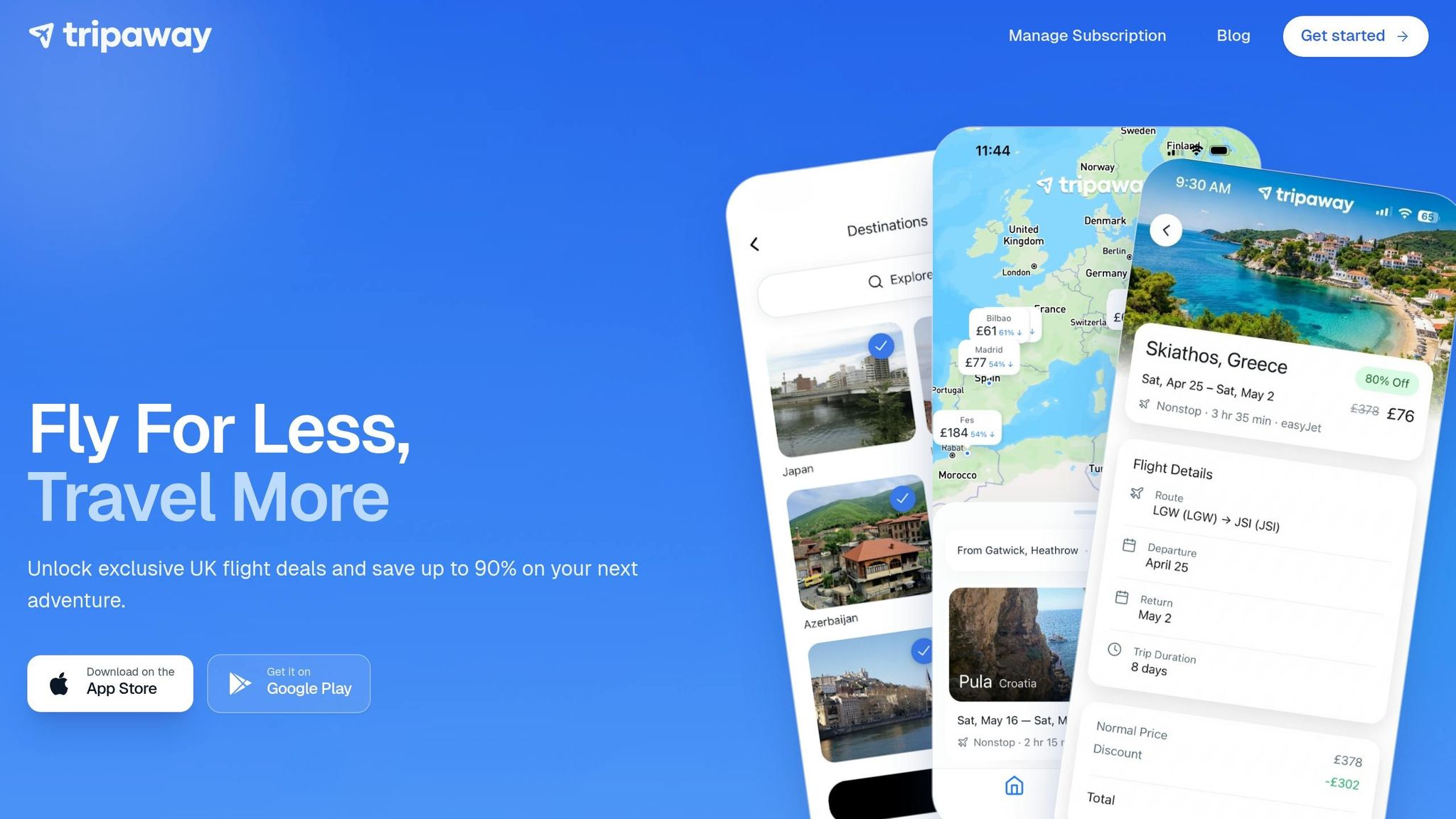
No matter your travel style - whether you're someone who books months in advance or prefers last-minute getaways - Tripaway has you covered. By monitoring millions of flight routes around the clock, the app uncovers hidden gems like price glitches, mistake fares, and flash sales that airlines often keep under wraps. For instance, when a £920 flight to Cyprus is mistakenly listed for £184, Tripaway's system detects it almost instantly. These bargains can appear regardless of when you book, making the app a win for both planners and spontaneous travellers.
Finding Early Booking Deals with Tripaway
If you're the type to plan your trips well in advance, Tripaway is your go-to tool for finding incredible discounts. The app compares live prices to usual fares, zeroing in on unadvertised price drops. Airlines occasionally test demand or quietly launch promotions, and Tripaway's algorithm is designed to catch those moments. Take November 2026 as an example: Tripaway flagged a British Airways non-stop round-trip to Athens for just £101 - an 80% discount from the usual £505 fare. This means you can enjoy the peace of mind that comes with booking early while still saving big. You can even tailor your deal feed by selecting preferred departure airports like LHR, LGW, MAN, or EDI, ensuring you’re notified when prices drop for your future trips. But the app doesn’t stop there - it’s equally adept at finding last-minute steals.
Catching Last-Minute Bargains with Tripaway
Although last-minute deals are becoming harder to find, they do pop up when flights are undersold or airlines unexpectedly add more seats. Tripaway's real-time tracking ensures it catches these fleeting discounts before they disappear. For example, in October 2026, the app spotted a non-stop Ryanair flight to Rome (4–12 October) for just £40 - a massive 79% savings compared to the usual £190 fare. Since mistake fares are often corrected quickly by airlines, having Tripaway on your side means you can act fast. Plus, the app’s "Daily Deals" section lists over 100 offers every day, covering both last-minute and future travel dates, so there’s always something to suit your plans.
Conclusion: Which Booking Strategy Should You Choose?
There’s no one-size-fits-all answer here - your ideal approach depends on your travel plans, level of flexibility, and destination. Booking early is a smart move if you're travelling during busy times like Christmas or summer holidays, flying long-haul, or using airline miles (which are best secured as early as possible to nab those limited award seats). That said, booking more than six months in advance can sometimes backfire if fares drop later.
For most travellers, the "sweet spot" strategy is the most cost-effective. This involves booking domestic flights 15–45 days before departure and international flights 30–60 days ahead. It strikes a balance, offering a good selection of flights while avoiding the steep price increases that often occur in the final two weeks before departure - when fares can rise by over 25%. This approach balances risk and reward, helping you secure better deals.
Last-minute bookings, on the other hand, are far less predictable. While apps like Tripaway might occasionally help you snag a mistake fare or a flash sale, the odds are not in your favour. As Matas Kibildis from Kiwi.com explains:
"Relying on last-minute flights as a money-saving strategy is a bit like gambling: sometimes you win, but most of the time you pay more than if you'd booked earlier".
In short, while early booking often leads to lower fares, banking on last-minute deals is a risky game.
Key Takeaways
Each strategy has its pros and cons, but flexibility is crucial. Adjusting your travel dates or flying from alternative airports can consistently cut costs. To save more, book flights on Fridays and aim to travel mid-week, steering clear of Sundays. For holiday travel, secure your tickets by mid-October, or consider flying on the actual holiday itself for better prices. Whether you’re planning months ahead or keeping an eye out for last-minute deals, tools like Tripaway can notify you when prices drop, helping you get the best of both worlds.
FAQs
How do I know if I’m in the sweet spot for booking?
To snag the best deals, keep a close eye on flight prices and stay alert for major price drops or error fares. These can pop up well in advance or closer to your travel date. As a rule of thumb, booking 6-8 weeks ahead for domestic trips or 2-4 months in advance for international flights often strikes the right balance between cost and availability. Using tools like Tripaway can also help you discover hidden bargains and identify the ideal time to book.
When does last-minute booking actually save money?
Last-minute bookings can sometimes help you snag cheaper flights, especially when airlines release unadvertised discounts or mistake fares. These deals often pop up for less popular routes or off-peak travel times. But here's the catch: as the departure date approaches, prices usually climb due to increased demand and dynamic pricing systems. While you might stumble upon a bargain, counting on last-minute deals is a gamble compared to the more reliable savings of booking in advance.
Should I pay extra for a flexible ticket when booking early?
Paying a bit more for a flexible ticket can make sense if your travel plans might shift. Booking early often means snagging cheaper fares, but having the option to change your ticket can protect you from steep last-minute prices if your schedule changes. Although it comes with an added cost, it offers peace of mind and could save you money in the long run, especially as prices tend to climb as the departure date approaches.