Ultimate Guide to Travel Rewards for Beginners

Ultimate Guide to Travel Rewards for Beginners
Want to save on travel? Here's how: Travel rewards let you earn points or miles through everyday spending - groceries, fuel, bills - and redeem them for flights, hotels, or upgrades. Programmes like British Airways Executive Club (Avios) and Virgin Atlantic Flying Club (Virgin Points) are popular in the UK, with options to convert rewards like Nectar points into travel perks. This guide breaks down the essentials:
- How it works: Earn points via credit cards, loyalty programmes, or shopping portals. Redeem them for flights, hotels, or experiences at better value than cashback.
- Types of rewards: Transferable points (e.g., Amex Membership Rewards), airline programmes (e.g., Avios), hotel schemes (e.g., Marriott Bonvoy), and fixed-value systems.
- Maximising rewards: Use credit cards with sign-up bonuses and category multipliers. Pair points with tools like Tripaway to find discounted flights.
- Redeeming wisely: Focus on high-value uses like premium cabin flights or luxury hotels. Avoid stockpiling points due to inflation in redemption costs.
How To Travel for FREE with Points and Miles in 2026 (Beginner’s Guide)
sbb-itb-7ea9975
How Travel Rewards Work
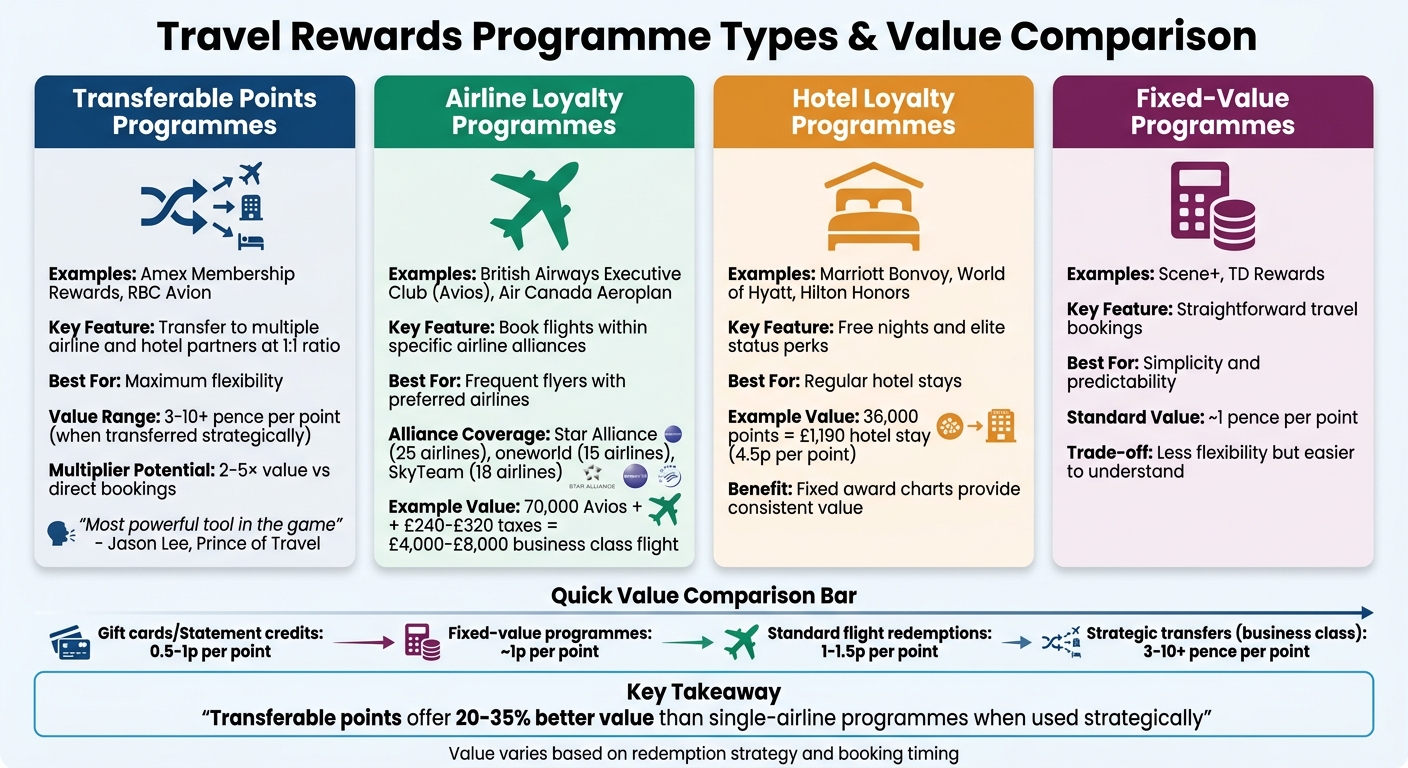
Travel Rewards Programme Types and Value Comparison Guide
Points, Miles, and Redemption Value Explained
At their essence, points and miles act as loyalty currencies - digital rewards you earn through credit card spending, flying, or hotel stays. The terms differ slightly: miles are tied to airline loyalty schemes like British Airways Avios, while points are used in hotel programmes (e.g., Marriott Bonvoy, Hilton Honors) or bank rewards systems (e.g., American Express Membership Rewards).
Understanding redemption value is crucial - it’s essentially the "exchange rate" for your points. This rate varies depending on how you use them. For example, redeeming points for gift cards or statement credits might only yield 0.5–1 pence per point. On the other hand, transferring points to airline partners for business-class flights could provide a value of 3–10+ pence per point. Take this example: as of April 2026, a one-way business class flight from North America to Doha on Qatar Airways Qsuites costs 70,000 Avios plus £240–£320 in taxes. Paying cash for the same flight would set you back between £4,000 and £8,000.
Transferable points, housed in bank rewards accounts, offer the ultimate flexibility. They can be transferred to a variety of airline or hotel partners, often at a 1:1 ratio. Jason Lee from Prince of Travel sums it up well:
"The flexibility to choose where your points go after you've earned them is what makes transferable points the most powerful tool in the game".
This flexibility lays the groundwork for understanding how different rewards programmes operate.
Main Types of Rewards Programmes
Travel rewards programmes generally fall into four main categories:
- Transferable points programmes: Systems like Amex Membership Rewards or RBC Avion allow points to be transferred to multiple airline and hotel partners, offering unparalleled flexibility.
- Airline loyalty programmes: Examples include Air Canada Aeroplan or British Airways Executive Club. These programmes are excellent for booking flights within specific airline alliances but limit you to that ecosystem.
- Hotel loyalty programmes: Programmes like Marriott Bonvoy or World of Hyatt focus on free nights and perks like elite status.
- Fixed-value programmes: Systems like Scene+ or TD Rewards offer straightforward travel bookings, typically at around 1 pence per point.
Most airlines are part of one of three major alliances: Star Alliance (25 airlines), oneworld (15 airlines), or SkyTeam (18 airlines). This means points earned in one airline’s programme can often book flights on any partner airline within the same alliance. For instance, British Airways Avios could secure you a Qantas flight to Sydney or an American Airlines flight to New York.
These categories highlight why having flexibility in how you redeem your points is so important.
Why Flexibility Matters in Redemption
Getting the most value from your points can turn everyday spending into extraordinary travel opportunities. Flexibility is your safety net against programme devaluations and can also unlock better deals. If one airline doesn’t have award availability, flexible points let you transfer to another partner. Even shifting your travel dates by just a day or two can significantly reduce the number of points required.
Transferring points strategically can multiply their value by 2–5× compared to using them for direct bookings. However, it’s critical to confirm award availability before transferring points - once moved, they’re locked into that programme. To keep your options open, focus on earning a single transferable points currency as your primary "reserve". This approach ensures you’re always ready to capitalise on the best opportunities.
How to Start Earning Travel Rewards
Earning Points with Rewards Credit Cards
Using rewards credit cards is one of the fastest ways to rack up travel points. Everyday purchases - like groceries or streaming subscriptions - can quickly add up, especially when combined with sign-up bonuses. These bonuses often range from 50,000 to 100,000 points, translating to £500–£1,500 in travel value.
To maximise your rewards, choose cards with category bonuses. For example, the American Express Cobalt Card offers 5× points on groceries and dining, while the British Airways Amex earns 1 Avios per £1 on general spending - or 1.5 Avios per £1 with its Premium Plus version. With strategic usage, it's possible to gain over £10,000 in value within the first year.
Timing your applications is also key. Space them out by about three months to safeguard your credit score, and apply before large expenses, like holiday shopping or home renovations. This makes it easier to meet the minimum spending requirements for sign-up bonuses. Most premium travel cards require a credit score of 720 or higher, while standard rewards cards usually need a minimum score of 670.
"Award travel isn't just about spending more money, it's about earning smarter. You're turning everyday expenses into unforgettable adventures."
– Jon Khoo, Founder, Swipe & Soar
A crucial tip: avoid carrying a balance on your credit card. Interest charges can quickly wipe out any rewards value, so always pay off your full statement balance every month.
Once you've mastered credit card strategies, it's time to expand your earning potential by joining airline and hotel loyalty programmes.
Joining Airline and Hotel Loyalty Programmes
In addition to credit cards, loyalty programmes are an excellent way to boost your points. A good starting point is to enrol in one programme from each of the three major airline alliances: oneworld (e.g., British Airways Executive Club), SkyTeam (e.g., Virgin Atlantic Flying Club), and Star Alliance (e.g., Lufthansa Miles & More). This ensures you can earn points no matter which airline you travel with.
For hotels, sign up for major loyalty schemes like Marriott Bonvoy, Hilton Honors, IHG One Rewards, and World of Hyatt. Always include your loyalty programme number when booking, even if you're paying with a rewards credit card. This "double dipping" allows you to earn points from both the loyalty programme and your credit card provider simultaneously.
UK residents can take advantage of additional opportunities, like converting everyday rewards from retailers such as Sainsbury’s into travel points. Similarly, airline shopping portals, such as the BA Avios Shopping Portal, offer bonus points for purchases from popular retailers like Apple, John Lewis, and M&S.
Earning Rewards from Daily Spending
Your everyday spending plays a big role in building your points balance. Groceries, utilities, insurance payments, and subscriptions all contribute when routed through the right rewards card. Using specific cards for targeted spending categories helps maximise your earnings.
Shopping portals add another layer of rewards. Before making an online purchase, check which portal offers the best bonus for that retailer. These portals can provide between 1× and 15× bonus points per pound spent, on top of your regular credit card rewards. Dining rewards programmes work similarly, automatically awarding points when you use a linked card at participating restaurants.
The savings can be impressive. For instance, instead of spending £500,000 on a 1% cash-back card to cover a £5,000 business-class flight, you could earn the same value by accumulating 70,000 transferable points through everyday spending.
"The right type of points, combined with a basic understanding of transferable currencies and loyalty programs, can open up a whole new world of travel."
– Jason Lee, Prince of Travel
Getting the Most Value When Redeeming Points
Best Ways to Use Points: Flights and Hotels
Using points for flights and hotels can stretch their value up to five times more than cashback options. For example, redeeming points for business class seats often yields nearly 6 pence per point compared to the standard 1 pence for cashback.
To calculate the value per point (PPP), use this formula:
(Cash Price – Taxes Paid) ÷ Points Used.
Aim for redemptions that deliver more than 1–1.5 pence per point. Here's a real-life example: a traveller booked Virgin Atlantic Upper Class from Atlanta to London, transferring 34,800 Amex points and paying £630 in taxes for a seat valued at £4,600. That’s a significant return on points.
Fixed award charts, such as Hyatt’s, can offer consistent value, even during high-demand periods. During the Eras Tour weekend in October 2024, someone used 36,000 points for two nights at the Hyatt Centric French Quarter in New Orleans. With cash rates at £595 per night (£1,190 total), the redemption delivered 4.5 pence per point. On the other hand, dynamic pricing programmes like Delta’s adjust based on demand, which can sometimes lead to less favourable deals. For beginners, fixed award charts are often a safer bet.
Avoid stockpiling points for too long. Inflation in point values means a flight that costs 40,000 miles today might require 60,000 miles in just a few years. The best strategy? "Earn and burn" - redeem your points within a reasonable timeframe rather than waiting for years.
"Flexibility is the single most important factor in succeeding with travel rewards."
– Brad Barrett, Co-founder, ChooseFI
Next, let’s discuss how transferable points programmes can add even more flexibility to your redemptions.
How Transferable Points Programmes Work
Transferable points allow you to move rewards between various travel partners, helping you avoid locking your points into a single airline or hotel programme. This flexibility enables you to take advantage of the best redemption rates across multiple options.
By strategically using transferable points, you can often achieve 20–35% better value compared to single-airline programmes. For instance, a business class flight to Tokyo priced at £4,450 can often be booked for just 70,000 transferable points. These points also provide access to major airline alliances like Star Alliance, oneworld, and SkyTeam, giving you the ability to book flights on hundreds of airlines from one points pool.
Occasionally, credit card transfer bonuses - ranging from 15% to 40% - can significantly boost your mileage. In January 2025, a traveller used a 40% Amex transfer bonus to book Virgin Atlantic Upper Class, reducing the required points from 58,000 to just 34,800.
Important tip: Never transfer points until you’ve confirmed award availability and are ready to book. Transfers are irreversible. To maintain flexibility, it’s wise to keep at least 20% of your transferable points in your credit card programme instead of transferring them prematurely.
"The intelligent approach is flexible liquidity: keep transferable points in one place and only convert when a clear high‑value use appears."
– Oliver Hart, Senior Editor, Scanflight
With your transferable points in place, the next step is learning how to book award travel effectively.
Booking Award Travel: Practical Tips
Now that you’ve earned your points, here’s how to maximise their value when booking award travel. Award seats usually become available 300–355 days before departure. Booking early is crucial, especially for popular routes or premium cabins. Tools like PointsYeah or Roame Travel can help you quickly compare availability across multiple programmes.
Take advantage of airline alliances for better deals. For example, British Airways Avios can be used to book American Airlines flights at a lower mileage cost. A round trip from Los Angeles to Honolulu in April 2026 cost 21,600 Delta SkyMiles when booked through Delta, but 30,000 miles when using Air Canada Aeroplan or Avianca LifeMiles on United flights.
Keep an eye out for "sweet spots" - routes or programmes offering exceptional value. Distance-based redemptions work well for short-haul flights, while some partner programmes, like ANA miles for business class, can yield excellent returns. In one example from August 2022, a traveller booked business class from Seattle to Sydney with a stopover in Tokyo for 117,500 Amex points transferred to ANA. After paying £227 in taxes, the redemption saved them against a £5,400 cash price, delivering 5.9 pence per point.
Don’t forget to factor in taxes and fees when evaluating redemptions. High carrier-imposed surcharges can sometimes make cashback or travel credits a better option. Follow the 80/20 rule: if a redemption meets your travel goals and offers above-average value, book it without overthinking.
Using Multiple Cards to Earn More Rewards
Why Multiple Cards Can Increase Your Earnings
If you're serious about maximising your rewards, using multiple cards can be a game-changer. Different cards excel in different spending categories, so having more than one allows you to match your purchases to the card that earns the most points. For example, one card might give you 4× points on groceries, another 2× on travel, and a third might offer 5× points on rotating categories like petrol or department stores.
The trick is not to overload your wallet but to focus on a small, efficient selection of 2–4 cards. This approach follows the 80/20 rule: around 80% of your rewards will come from just 20% of your cards. With this strategy, savvy travellers often earn 2–5× more rewards than those sticking to a single card.
Take the "Chase Trifecta" as an example. This strategy combines a primary travel card for redemptions, a high-multiplier card for categories like dining and groceries, and a general-purpose card for everyday spending. Someone spending £35,000 a year could rack up 83,000 points - worth over £1,000 in travel rewards. Beginners using just one or two cards might earn £320–£480 annually, whereas advanced users with three or four cards can reach £1,200–£2,000 or more.
Don't overlook sign-up bonuses, either. These offers can give your points balance a massive boost, often equating to 6–12 months of regular spending in one go.
Weighing Annual Fees Against Rewards Earned
Before committing to a card with an annual fee, it's essential to do the maths. Divide the fee by the value of the points you'll earn to see if the card pays for itself. For instance, if a card has a £95 fee and your points are worth 1.25 pence each, you'll need to earn at least 7,600 points to break even.
Many premium cards offer credits that can offset these fees significantly. A card with a £250 annual fee might include £240 in credits for dining, travel, or groceries, effectively reducing your cost to just £10. Add perks like airport lounge access, travel insurance, or free checked bags, and the deal often becomes even sweeter.
"If the card's credits and perks exceed the fee, keep it. Otherwise, consider downgrading to a no-fee product."
– Alex Mercer, Senior Editor & Travel Rewards Strategist
It's a good idea to review your cards annually. If the benefits no longer outweigh the fee, consider downgrading to a no-fee version to maintain your credit history without the added cost. And remember, this strategy only works if you pay off your balance in full each month - interest charges will quickly erase any rewards earned.
Adding New Cards to Your Collection
Timing is everything when adding new cards. Space out applications by at least three months. Before applying, check your spending habits over the past three months to pinpoint where you spend the most. This ensures that any new card aligns with your top spending categories and maximises your rewards.
Be mindful of issuer-specific rules. For example, Chase's "5/24 Rule" typically blocks applications if you've opened five or more cards in the past 24 months. In the UK, lenders like Halifax or NatWest offer soft search tools to check your eligibility without affecting your credit score.
To make meeting minimum spending requirements easier, time your applications around large expenses like holiday shopping, home renovations, or annual insurance payments. If you have cards with rotating 5× bonus categories, set reminders for the start of each quarter - 1 January, 1 April, 1 July, and 1 October - to activate these bonuses on time.
Finally, think about how your cards work together. Flexible rewards cards, like those offering Amex Membership Rewards, allow you to transfer points to various airlines and hotels, giving you protection against devaluations. On the other hand, co-branded cards tied to a single airline or hotel chain often provide perks like priority boarding or companion vouchers. Your choice should depend on whether you value flexibility or brand-specific benefits more.
Finding Cheap Flights with Tripaway
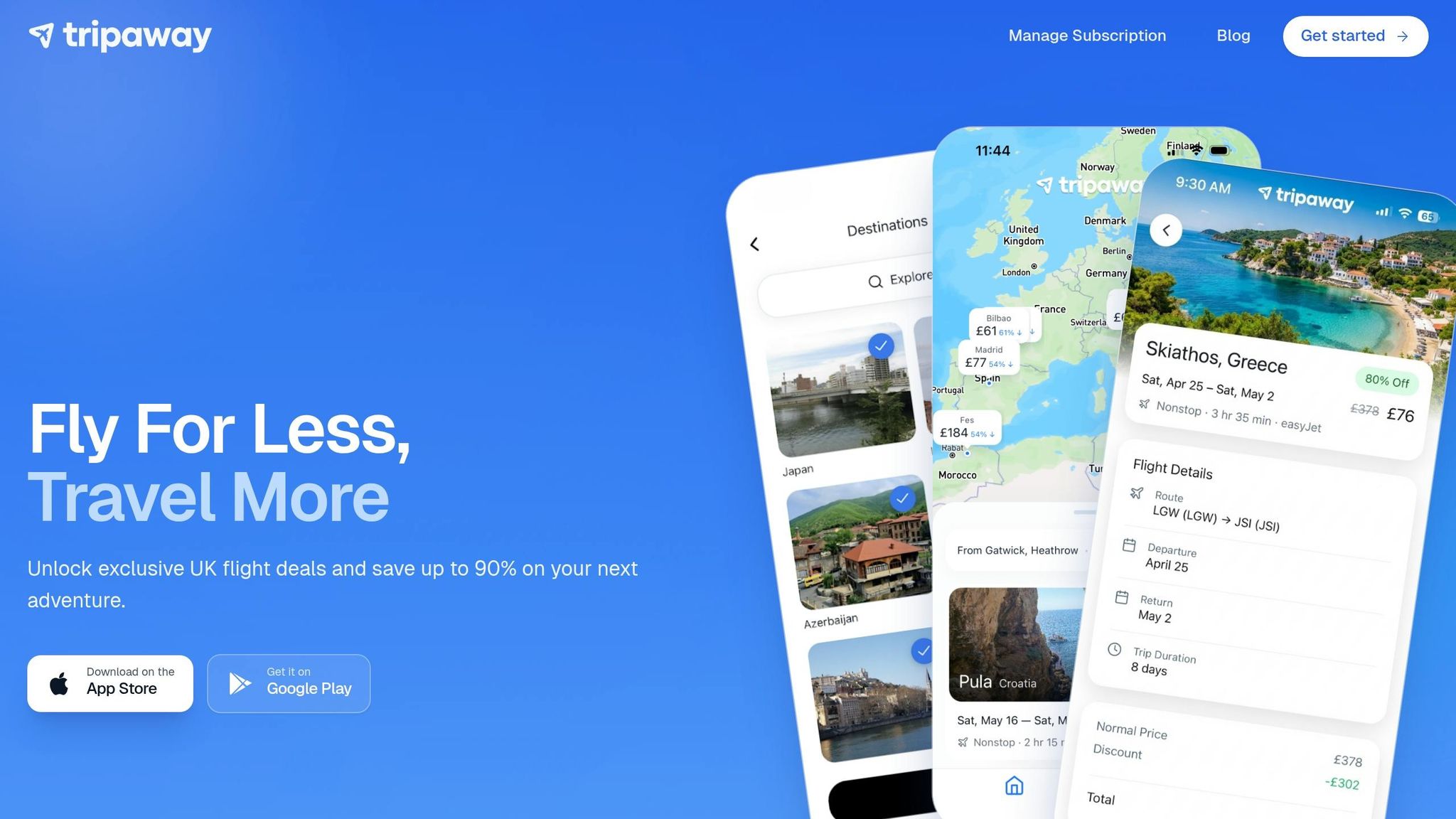
How Tripaway Finds Flight Deals
As you rack up points through credit cards and loyalty schemes, Tripaway works behind the scenes to uncover flight deals that most travellers miss. The app uses advanced algorithms to track millions of flight routes in real-time, spotting hidden price drops, mistake fares, and flash sales that rarely appear on standard booking platforms.
These algorithms dive deep into fare structures, detecting inconsistencies caused by airline pricing strategies like "married segment logic" and fare filings. Essentially, they pinpoint pricing gaps that airlines unintentionally create, offering you access to deals that are valid but seldom advertised. By consolidating options from multiple airlines while avoiding "engagement flags" - which can increase prices by 8–15% after just a few searches - Tripaway ensures you get the best possible fare without triggering price hikes. This tech-driven approach makes planning your next trip from the UK a lot less stressful.
"This isn't just about finding cheap flights; it's about AI interrogating opaque economic systems in real-time."
– i10x Analysis
Benefits for Travellers in the UK
Tripaway is designed with UK travellers in mind, offering custom options for major airports like London Heathrow, Manchester, and Edinburgh. This means you'll only get alerts for deals that are relevant to your preferred departure points, avoiding unnecessary notifications about flights from other European cities.
The savings can be impressive. With Tripaway, you could cut airfare costs by 40–90% compared to standard ticket prices. Platforms that anonymise searches, like Tripaway, often deliver prices 12–18% lower than what you'd find by searching directly on airline websites. For UK departures, combining fare sales with loyalty points and promotional offers can reduce your total costs by as much as 30–50%.
The app is particularly good at catching flash sales that last only 48–72 hours. By setting up alerts for your local UK airport, you'll be among the first to know about mistake fares and sudden price drops - deals that often disappear quickly. These features ensure UK travellers can act fast and save big on their flights.
Combining Tripaway with Travel Rewards
To get the most out of your travel budget, pair Tripaway with your loyalty rewards. The key is to use Tripaway as a tool to find the lowest cash fare first, including hidden deals and mistake fares, and then decide whether using points or cash offers better value.
Here’s a simple way to calculate: take Tripaway's cash fare, subtract taxes and fees, and divide that figure by the number of points required. If the value per point falls below 1–1.5p, paying cash through Tripaway might be the smarter choice. Use Tripaway's steep discounts for economy flights to save cash, reserving your points for premium cabins where they can deliver more value.
"A layered booking approach - sales first, points second, promos third - usually produces the best cash reduction whilst keeping flexibility."
– Scanflights
Tripaway can also help you book affordable positioning flights to major hubs like London, Paris, or New York. These hubs often have better availability for long-haul award flights, allowing you to save your points for the pricier legs of your journey while using discounted cash fares for shorter connections.
Conclusion
When used wisely, travel rewards can significantly reduce the cost of flights and hotels. The trick lies in pairing a strong sign-up bonus with thoughtful everyday spending, then transferring points to airline and hotel partners instead of opting for less valuable cash-back options. A well-chosen rewards card has the potential to deliver over £8,000 in travel benefits within its first year. With careful redemptions, you could secure business-class flights for as little as 3–10p per point, far exceeding the typical 0.5–1p value seen with cash-back redemptions.
"Rewards points are incredibly valuable - but only if you know how to use them."
– ChooseFI
Start by checking your credit score, as most rewards cards require a score of at least 670, while premium cards often demand 720 or higher. Choose a card that offers a sign-up bonus suited to your spending habits, and use it for everyday purchases like groceries and bills to hit the minimum spend threshold. Familiarise yourself with the airline and hotel partners linked to your card’s programme to maximise the value of your points through strategic transfers.
Additionally, using platforms like Tripaway to find discounted cash fares can help you save points for more valuable redemptions. When Tripaway highlights a flash sale or mistake fare, compare the cash price with your points redemption value. If the value per point is below 1–1.5p, paying cash may be the better option. Combining this approach - prioritising deals and using points strategically - can lead to significant savings while keeping your travel plans flexible.
FAQs
Which travel rewards scheme should I start with?
When it comes to travel rewards schemes, the best choice depends on what you’re aiming for. If you’re looking to earn points through your everyday spending, a travel credit card is an excellent option. In the UK, popular choices include British Airways Avios or Virgin Atlantic Flying Club, which are great for flights.
For those who prefer more flexibility, consider cards like American Express. These allow you to transfer points to a range of airline or hotel partners, giving you more options to suit your travel plans.
How do I check if using points beats paying cash?
When deciding whether to use points or pay cash, it’s important to evaluate the value of your points against the cash price. Take into account details like the route length, cabin class, applicable taxes, fees, and availability. If the value of your points per unit ends up being higher than the cash cost after factoring in all expenses, using points will likely give you better value. Always focus on the total value of the redemption, not just the headline fare.
When should I transfer points to an airline or hotel partner?
When transferring points to an airline or hotel partner, timing is everything. Only make the transfer when you're ready to lock in your travel plans. Availability for reward flights or hotel stays can shift rapidly, and those coveted seats or rooms might vanish before you know it.
Keep in mind: most point transfers are final - there’s no undo button. To avoid losing your points or missing out on your dream booking, always double-check that your desired flight or hotel is available before initiating the transfer.