Flight Deal Alerts: Are They Worth It?
Flight Deal Alerts: Are They Worth It?
Flight deal alerts can save you time and money by notifying you about airline price drops, mistake fares, and flash sales. These services use algorithms to track airfare trends and send you deals tailored to your preferences, like home airport and destination. Travelers using alerts saved an average of $297 per trip in 2024, with discounts ranging from 40% to 90%.
Here’s why they’re helpful:
- 24/7 monitoring: Alerts catch price changes you might miss.
- Customizable preferences: Focus on airports, regions, or budgets that matter to you.
- Significant savings: Examples include $135 roundtrips to Dublin or $38 domestic flights.
- Time-efficient: Automated tracking eliminates manual searches.
However, these services work best for flexible travelers who can act quickly. If your travel dates or destinations are fixed, or you can’t book immediately, you may not benefit as much. Free plans offer basic features, while premium subscriptions provide more alerts and filters. For frequent flyers or bargain hunters, even one good deal can outweigh the cost of a subscription.
The Problem: Why Travelers Overpay for Flights
If you've ever felt like booking flights is more of a gamble than a straightforward process, you're not alone. The way airfare pricing works often leaves travelers paying more than they should. Here's why.
Unpredictable Airfare Pricing
Airline ticket prices are anything but stable. In fact, a single seat's price can change up to 35 times before the flight takes off. This is due to airlines using dynamic pricing algorithms that adjust fares in real time. These algorithms consider factors like demand, competitor pricing, and how many seats are left in each fare category. Once the cheapest seats are gone, prices automatically move to the next, more expensive tier.
And that's not all. External factors like fluctuating oil prices can increase fuel surcharges, while the arrival or departure of a low-cost carrier on a specific route can lead to sudden shifts in pricing. Add in holidays, major events, or even localized happenings, and prices can spike dramatically - sometimes by 25–50%.
"A single seat's price can change up to 35 times before the flight departs, and factors like holidays or major events can cause flight prices to spike by 25–50%."
- Jesse Neugarten, CEO & Founder, Dollar Flight Club
This constant price volatility makes it incredibly hard for travelers to time their bookings perfectly.
Mistake Fares and Flash Sales Go Unnoticed
Ever heard of mistake fares? These rare pricing errors can slash costs by 40–90%. But here’s the catch: they don’t last long. Airlines typically correct these errors within minutes or hours. Similarly, flash sales - unadvertised, short-term promotions - offer steep discounts to fill seats or stay competitive, but they usually disappear within one to three days.
The problem? Most travelers miss these opportunities. Many stop searching for flights after just a few weeks, unaware that prices could drop significantly during this time. And even those who rely on generic alert services often receive irrelevant notifications that don’t match their travel plans.
Manual Searches Waste Time and Miss Deals
If you've ever tried manually tracking flight prices, you know how draining it can be. Comparing airlines, dates, and booking platforms takes time - time most people don’t have. It’s no wonder many abandon the process after just a couple of weeks.
"Manual tracking works in theory but fails in practice because, well, you have a life. And airlines know this."
- Refare
Even after booking, travelers often stop monitoring prices. This means they could miss out on airline credits or refunds if fares drop further. Essentially, manual tracking not only wastes time but also risks leaving money on the table.
All of these challenges highlight why automated flight deal alerts have become so popular - they take the guesswork out of finding the best prices.
sbb-itb-7ea9975
How Flight Deal Alerts Solve the Problem
Flight deal alerts tackle the challenges of unpredictable pricing and missed opportunities by flipping the script: instead of you hunting for deals, they come straight to you. These systems operate non-stop, scanning thousands of flight options across countless airlines and booking platforms to catch discounts as soon as they surface.
Instant Notifications for Price Drops
When it comes to flight deals, timing is everything. Alert systems continuously monitor airline APIs and booking platforms, comparing current prices with historical data to identify anomalies. For instance, if a fare from New York to Tokyo drops from $1,200 to $480, you'll be notified within minutes.
This rapid notification is crucial for snagging mistake fares or flash sales that might otherwise slip through the cracks. Take Summer 2025, for example: Thrifty Traveler Premium caught a pricing error for roundtrip flights from Minneapolis–St. Paul to Dublin at just $135. Similarly, Dollar Flight Club members grabbed a Chicago–Phoenix roundtrip for only $38, a staggering 91.5% discount from the usual $450 fare. These success stories directly address the frustration of missing out on great deals.
Interestingly, mobile app notifications have a 22% higher success rate compared to desktop alerts, while SMS notifications often outperform email when it comes to immediacy .
Customizable Alert Preferences
One of the standout features of modern flight alert services is the ability to customize them to fit your travel plans. You can specify your home airport, preferred destinations, and even set price limits, ensuring you only receive alerts that match your criteria. This targeted approach significantly reduces "alert fatigue." Instead of wading through 20+ generic weekly deals with limited relevance, airport-specific alerts focus on flights departing from your chosen location, delivering nearly 100% relevant options. Expanding your search to include multiple nearby airports can also increase your chances of landing a bargain.
Travelers who keep their options open - such as setting alerts for broad regions like "Europe" or "South America" - often score the biggest discounts as deals pop up across various destinations. Additionally, those with flexible travel dates can save an extra 27% by taking advantage of off-peak times identified by these alert systems. Together, personalized preferences and instant notifications create a powerful tool for securing affordable airfare.
Savings of 40–90% on Airfare
Flight deal alerts can slash airfare costs by an impressive 40–90%. Real-life examples highlight just how impactful these savings can be. In 2025, Stephanie K. and her fiancé used Dollar Flight Club alerts to save over $400 each on their summer flights to Paris, turning what could have been an out-of-reach trip into a budget-friendly adventure. That same year, Homebase Flights uncovered deals like Atlanta to Athens for $410 (usually $1,100) and Dallas to Tokyo for $520 (usually $1,200).
Real-time tracking doesn’t just save money - it also saves time. Users of these alert systems save an average of 37% more on international flights compared to those relying on manual searches. Plus, they tend to book flights 31 days earlier than the general population, locking in lower prices before demand drives them up.
Tripaway's Flight Deal Alerts: Features and Benefits
What Tripaway Offers
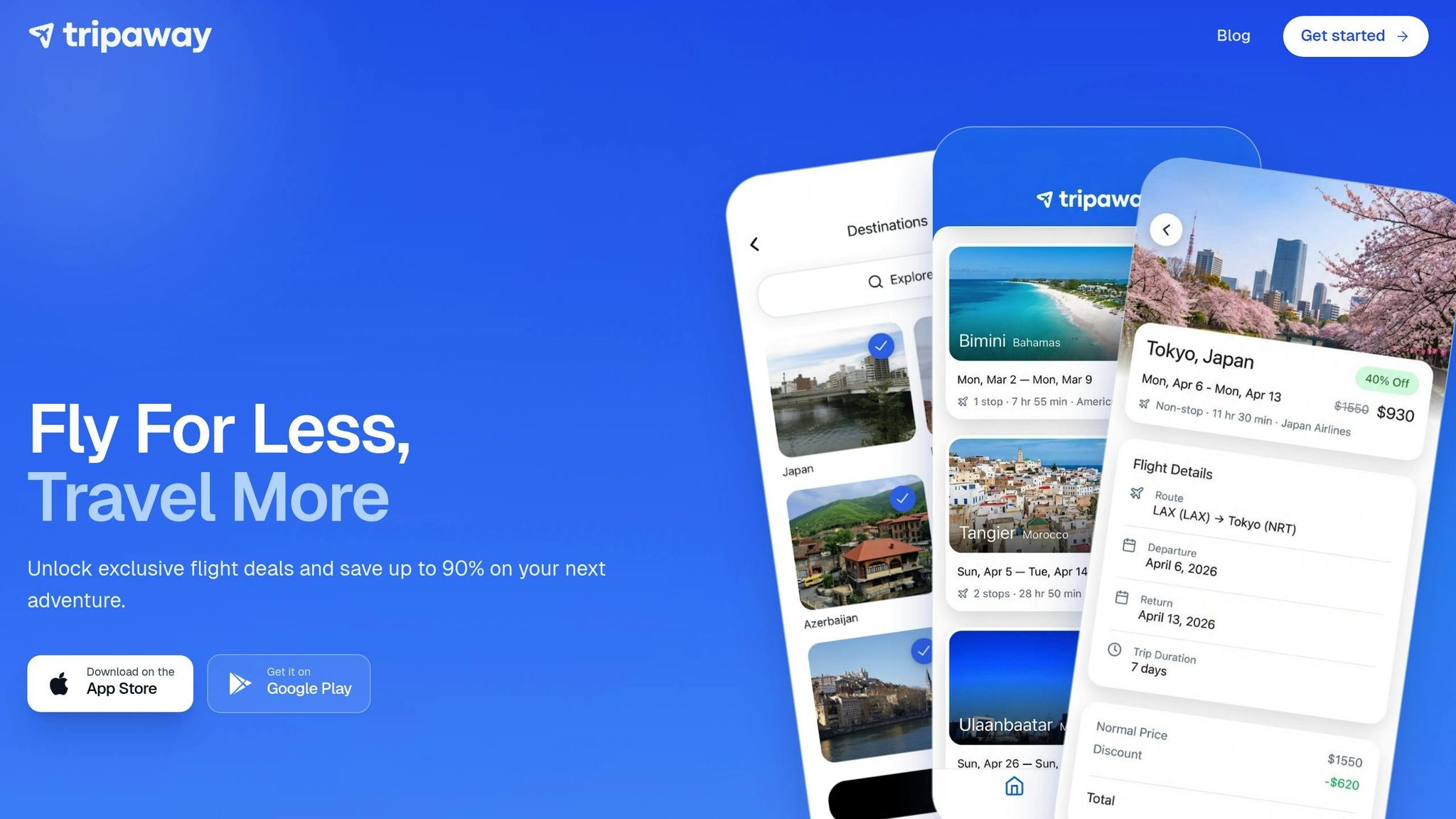
Tripaway brings a personalized approach to automated flight alerts, designed specifically for U.S. travelers. Using proprietary algorithms, the platform scans millions of flight routes every second to uncover hidden mistake fares and limited-time flash sales.
With a focus on departures from U.S. airports, Tripaway allows users to customize alerts based on their preferred home airport - whether it's JFK, LAX, or ORD. This ensures that the deals you see are relevant to your location. From European city escapes to tropical beach vacations, Tripaway tracks deals to destinations worldwide. Notifications are delivered straight to your device via a dedicated mobile app, available on both the App Store and Google Play. These features set the stage for flexible pricing options, which are detailed below.
Free vs. Premium Plans
Tripaway offers two membership tiers, catering to different travel needs and budgets. The Free Plan gives users access to basic flight deals from their chosen U.S. airports, though notifications are limited. For frequent travelers or those looking for more options, the Premium Plan unlocks unlimited notifications, advanced filters, and priority alerts. You can start with the free app to explore deals and upgrade at any time for enhanced features.
How Tripaway Users Have Saved Money
The plan you choose significantly impacts the number and quality of alerts you receive, which can translate into major savings. Tripaway users report saving between 40% and 90% on airfare. These savings aren't hypothetical - they're based on real bookings. For example:
- A non-stop roundtrip to Santorini, Greece dropped from $900 to $198 on United Airlines - a 78% discount.
- A JAL non-stop roundtrip to Tokyo, Japan was reduced from $1,380 to $524, saving travelers 62%.
- Delta flights to Rome, Italy went from $870 to $390, offering a 55% savings.
"Our members save an average of 40–90% off standard airfare prices. We specifically look for mistake fares and limited-time sales that aren't typically advertised." - Tripaway
These examples highlight the real-world impact of Tripaway's alerts. By leveraging real-time monitoring, users are notified immediately when significant price drops occur, giving them the chance to lock in incredible deals before they're gone. Tripaway doesn’t just find low fares - it helps travelers book smarter and save big.
Pros and Cons of Flight Deal Alerts
Pros and Cons of Flight Deal Alert Services
Benefits and Drawbacks Compared
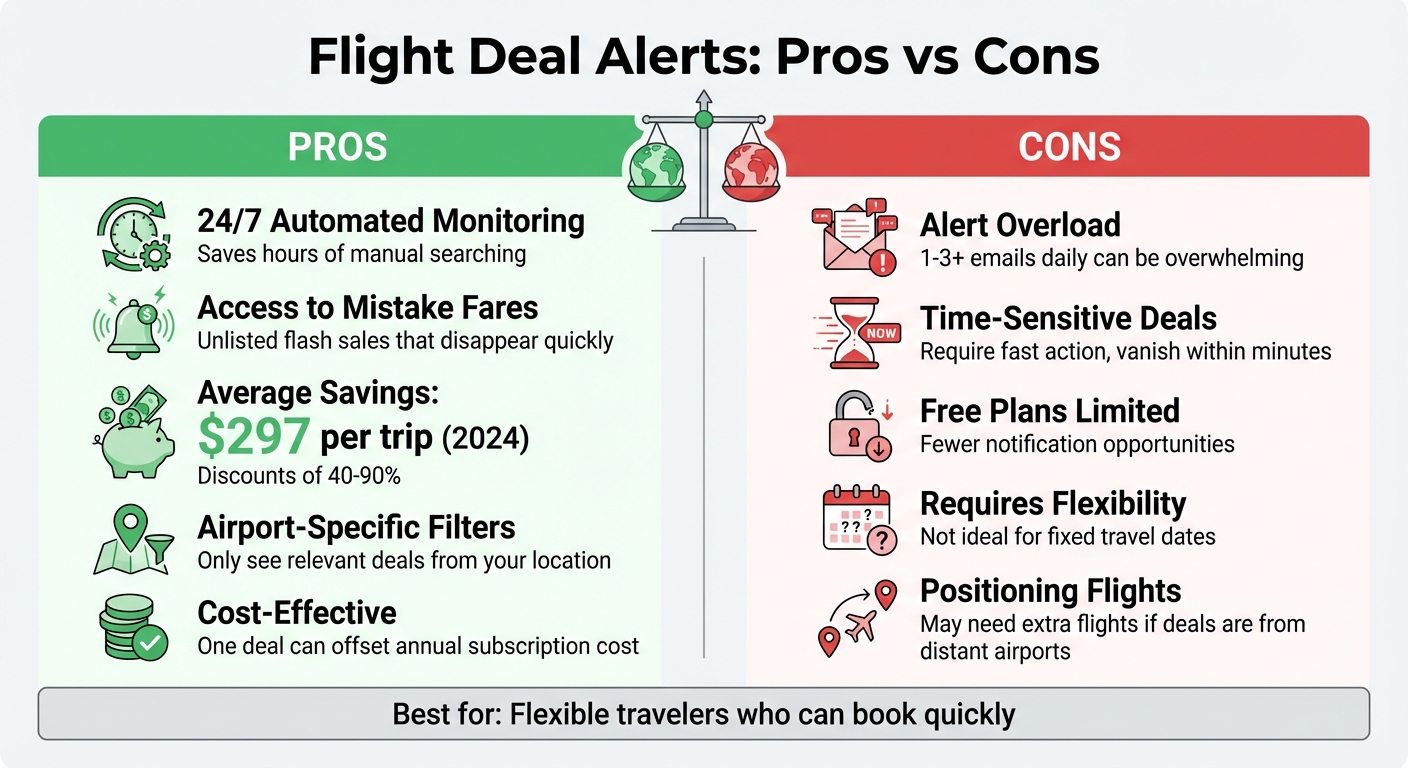
Flight deal alerts can be incredibly helpful, but they're not a one-size-fits-all solution. Weighing the positives and negatives can help you figure out if they align with your travel needs and booking preferences.
| Pros | Cons |
|---|---|
| 24/7 automated monitoring saves you from spending hours searching airline websites | Alert overload - services often send 1–3 or more emails daily, which can feel overwhelming, especially with generic alerts |
| Access to mistake fares and unlisted flash sales that disappear quickly | Time-sensitive deals require fast action, as they can vanish within minutes |
| Average savings of $297 per trip in 2024, with discounts ranging from 40% to 90% | Free plans limit notifications, which means fewer opportunities to snag deals |
| Filters for specific airports ensure you only see deals departing from your chosen location | Not ideal for fixed travel dates, as flexibility is key to making the most of these alerts |
| One deal can offset the cost of an annual subscription | Positioning flights may be needed if deals originate from airports far from you, potentially reducing savings |
How Tripaway Addresses Common Issues
Tripaway takes the pros and cons of flight deal alerts and fine-tunes the experience to make it more user-friendly. For starters, the platform offers airport-specific filtering, so you only receive deals departing from U.S. airports you select - like JFK, LAX, or ORD. This eliminates unnecessary alerts and helps reduce email fatigue while ensuring every notification is relevant to you.
The app’s mobile notifications tackle the issue of time-sensitive deals. Instead of getting buried in your inbox, alerts come directly to your phone, giving you a better chance to act before a deal disappears. Additionally, the Premium Plan includes unlimited notifications and advanced filters, allowing you to customize alerts based on your specific preferences - so you can focus on deals that truly matter.
If you're hesitant about committing to a subscription, Tripaway’s free plan lets you test the waters without any financial risk. Plus, with savings of 40% to 90% on airfare, even one booked deal can cover the cost of the annual fee. Whether you're an occasional traveler or a frequent flyer, Tripaway offers a practical way to stretch your travel budget further.
Conclusion: Are Flight Deal Alerts Worth It?
What to Consider Before Subscribing
Flight deal alerts can be a game-changer, but whether they're worth it depends on your travel habits and flexibility. If you take at least one or two trips a year, the potential savings - averaging $297 per trip in 2024 and up to $2,800 annually - can easily justify a subscription fee of $49–$99.
Flexibility is the key to unlocking these savings. Travelers who can shift their schedules or explore new destinations can benefit the most, snagging discounts of up to 90% on mistake fares and flash sales. On the other hand, if your travel plans are rigid - specific dates or destinations - the alerts might not be as effective. Your home airport also plays a role. Living near a major hub like JFK or LAX often means more deals, while smaller regional airports may offer fewer options. It's worth checking if your airport is frequently included in the service's deal history.
Timing is another critical factor. The best deals can disappear in a matter of hours - or even minutes. Mobile alerts tend to be more effective, with a 22% higher success rate compared to desktop notifications. If you're someone who can't monitor your phone regularly or book quickly, you might miss out on many opportunities.
Considering these aspects can help you determine if flight deal alerts align with your travel needs.
Final Thoughts
Flight deal alerts aren't magical solutions, but they are practical tools that simplify the hunt for cheap flights. By automating the process, they save you time and highlight deals you might otherwise overlook - an essential advantage as airfare prices continue to climb.
Tripaway’s free plan offers a risk-free way to explore this service, and even one successful booking could cover the cost of a paid subscription. For those who value flexibility and can act quickly when deals pop up, flight deal alerts can be an effective way to save money and reduce the stress of travel planning. Use this information to decide if these tools align with your travel habits and savings goals.
FAQs
How fast do I need to book after an alert?
When you get a flight deal alert, don’t wait too long - try to book your ticket within 10 minutes. Airfare prices can fluctuate fast, and those great deals often vanish just as quickly. Acting quickly increases your chances of locking in those discounted fares before they’re gone or snapped up by other travelers.
Do flight deal alerts work for fixed dates?
Yes, flight deal alerts can work for specific dates if you set them for a particular range. However, they tend to be more effective when your travel dates are flexible, as this broadens your chances of snagging the best discounts.
Is Tripaway Premium worth paying for?
Tripaway Premium is a great choice for frequent travelers aiming to cut down on airfare expenses. Members get access to exclusive fares, rare mistake deals, and as many as 50 deal notifications each month. With potential savings averaging around $2,800 a year, the membership fee - ranging from $49 to $199 annually - can easily pay for itself. Plus, faster alerts and tailored options make it a handy tool for keeping travel costs in check.