When to Buy Plane Tickets: A Month-by-Month Guide

When to Buy Plane Tickets: A Month-by-Month Guide
Scoring cheap flights is all about timing. Here’s the key takeaway:
- Domestic flights: Book 1–3 months in advance.
- International flights: Book 2–8 months ahead.
- Avoid last-minute bookings: Prices spike within 21 days of departure.
- Cheapest times to fly: January and February offer lower fares, while summer months like July are the most expensive.
- Fly midweek: Departing on Tuesdays or Wednesdays can save you an average of $102.
- Peak travel (holidays): Book 3–7 months ahead for domestic and 4–10 months for international trips.
Tools like Tripaway can help track price drops and alert you to deals. Flexibility with dates, airports, and layovers also lowers costs.
When to Book a Flight for the Best Price (it’s not Tuesday)
sbb-itb-7ea9975
When to Book Flights Each Month
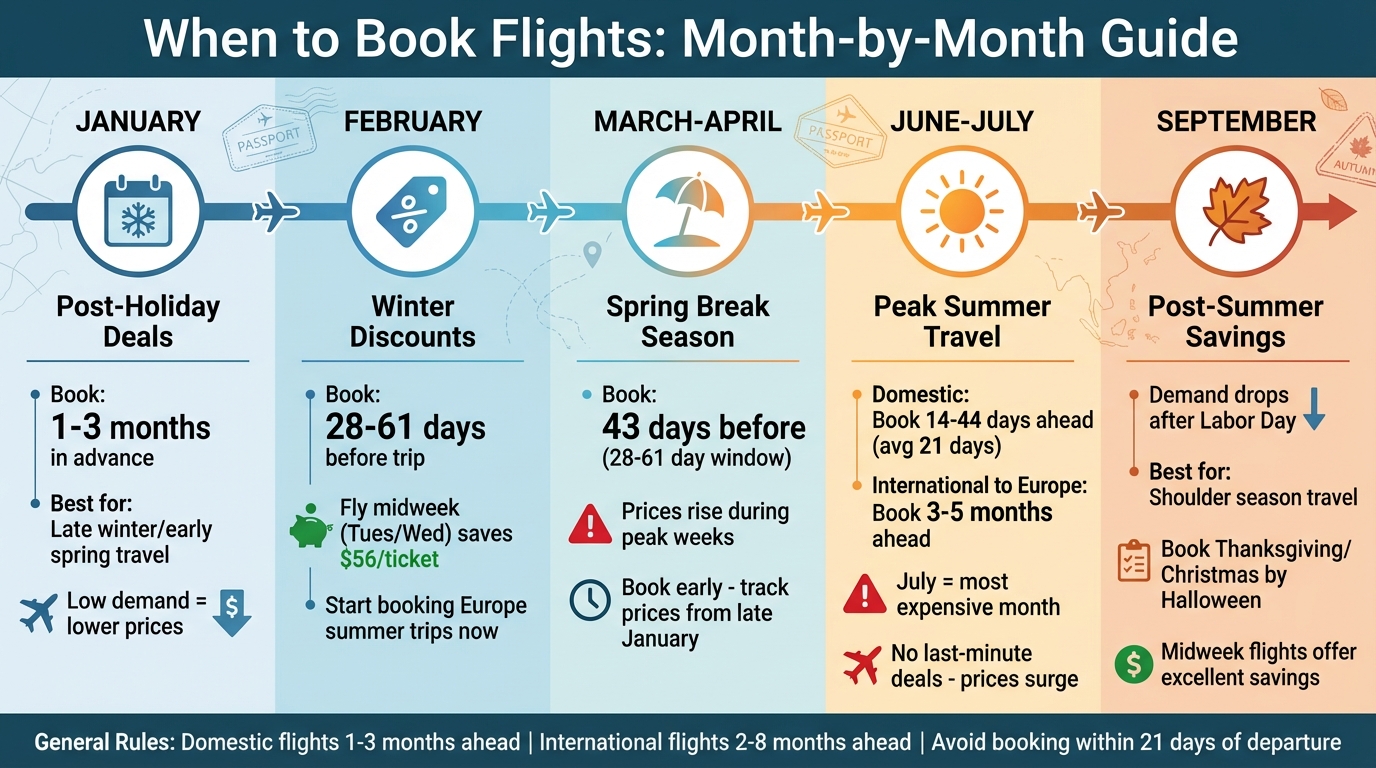
Best Times to Book Flights: Month-by-Month Booking Guide
Airfare prices are anything but static - they ebb and flow throughout the year. Here’s a month-by-month guide to help you snag the best deals, building on the seasonal trends mentioned earlier.
January: Post-Holiday Deals
Once the holiday rush fades, January becomes a sweet spot for budget-friendly domestic flights. With travel demand at a low, it’s a prime time to book trips for late winter or early spring. Plan to book domestic flights about 1–3 months in advance for the best rates. As February rolls in, travel demand remains quiet, offering more opportunities for flexible travelers to save.
February: Winter Travel Discounts
February sees significantly lighter air traffic compared to peak months like July. This reduced demand translates to lower prices, especially for travelers who can be flexible. Booking 28–61 days before your trip is ideal for late winter and early spring travel. For domestic flights, flying midweek - especially on Tuesdays and Wednesdays - can save you an average of $56 per ticket. February is also the time to start eyeing flights to Europe for summer vacations, as the 3–5 month booking window for June and July departures begins now.
March and April: Spring Break Planning
Spring break season ramps up in late March and early April, driving up demand - and prices. To secure the best fares, aim to book around 43 days before departure, with a safe window of 28–61 days. If you’re planning travel during peak spring break weeks, start tracking prices as early as late January to lock in deals before they disappear. For those looking ahead to summer travel in June and July, this is also a good time to strategize.
June and July: Summer Travel Preparation
Summer is the busiest travel season, and airfare prices reflect the demand - July often ranks as one of the most expensive months to fly. For domestic summer trips, booking 14–44 days in advance (with an average of 21 days) is your best bet for lower fares. For international flights to Europe, aim to book 3–5 months ahead. Don’t bank on last-minute deals - prices tend to surge as departure dates draw closer.
September: Post-Summer Savings
September is a bit like January - a quiet month for travel and a great time for deals. After Labor Day, demand plummets, and airlines reduce prices to fill seats before the holiday season. Midweek flights continue to offer excellent savings, and shoulder season travel (September through October) brings pleasant weather and lower fares compared to the summer peak. If you’re thinking about Thanksgiving or Christmas travel, now’s the time to act - booking by Halloween can help you dodge the steep fare hikes that usually hit in November.
How Tripaway Helps You Save Money Year-Round

Timing is everything when it comes to snagging great travel deals, but having the right tools can make all the difference. Knowing when to book is just one piece of the puzzle - the other is acting fast when deals appear. That’s where Tripaway steps in. Using advanced algorithms, Tripaway monitors millions of flight routes in real-time, keeping tabs on booking trends, seat availability, and competitor pricing. This saves you from endlessly refreshing airline websites or juggling multiple fare comparison tools.
Tripaway Features
One standout feature of Tripaway is its ability to spot mistake fares. These are those rare instances when a business class ticket is accidentally priced like an economy seat, or when international flights drop to shockingly low prices - think $200 instead of $1,000. Airlines usually fix these errors within hours, but Tripaway’s system catches them almost instantly, giving you a chance to grab these deals before they disappear.
Tripaway also helps you uncover unadvertised flight deals and flash sales that don’t show up on typical airline websites. Plus, you can tailor the app to focus on specific U.S. airports, making it even easier to find deals that match your travel plans. With savings ranging from 40% to 90% on airfare, Tripaway delivers these opportunities straight to your phone, allowing you to act quickly when the timing is just right.
To cater to different travel preferences, Tripaway offers two flexible plans.
Tripaway Plans Comparison
| Plan Name | Price | Key Features | Limitations |
|---|---|---|---|
| Free Plan | $0 | Basic deal notifications, U.S. airports | Limited notifications |
| Premium Plan | Pricing varies | Unlimited deal notifications, advanced filters, priority alerts | U.S. airports only |
The Free Plan is perfect for beginners who want to test the app with basic notifications. For those who travel often or during busy times like spring break or summer, the Premium Plan adds unlimited notifications, advanced filters, and priority alerts, ensuring you never miss a deal when competition is fierce.
More Tips for Finding Cheap Flights
Timing your booking is just one piece of the puzzle when it comes to saving on airfare. There are plenty of other strategies that can help you cut costs and make your travel budget stretch further. For example, flying midweek often comes with lower fares compared to weekend departures.
Being flexible with your plans can make a big difference, too. Shifting your travel dates by just a few days can unlock better deals. Use flexible date search tools to compare prices across a week-long window, and don’t forget to check nearby airports. Exploring options within a 70-mile radius can sometimes reveal much cheaper flights. For instance, flying out of Oakland instead of San Francisco or choosing Gatwick over Heathrow could save you hundreds of dollars.
Another way to save is by considering flights with layovers instead of direct routes. While less convenient, flights with at least one stop tend to cost about 22% less than non-stop options. For example, a direct flight from New York to Berlin in August might cost $800 or more, but adding an 18-hour layover in Oslo could bring the price down to as low as $250.
Timing your departure can also impact your wallet. Flights during off-peak hours, like red-eye or early morning departures, are typically cheaper than those during peak business travel hours. And if you're traveling around major holidays, flying on the actual holiday - like Christmas Day or Thanksgiving - can often be much cheaper than traveling right before or after.
To stay on top of price changes, set up Tripaway price alerts. This way, you’ll get notified as soon as fares drop, saving you from the hassle of constantly checking. On average, flight prices fluctuate about 49 times from the time they’re first listed until the departure date.
"The best hack is to let technology find the best value. Set up Price Alerts, rely on Price Drop Protection to swoop in and reimburse you if prices drop, and use... tools to see where you can fly for at least 20% lower than typical."
- Melanie Fish, Head of Expedia Group Brands Public Relations
Wrapping It Up
This month-by-month guide lays out the essentials for cutting travel costs and booking smarter. Timing is everything - grab those post-holiday deals in January, lock in summer flights at least three months ahead, or snag lower fares after Labor Day in September. Recognizing these patterns helps you plan trips without breaking the bank.
Flexibility is another game-changer. Adjusting your travel dates, flying midweek, or opting for flights with layovers can lead to big savings. For instance, flying on a Wednesday can save you an average of $102, and choosing layovers can cut ticket prices by about 22%. Combine these strategies with the right booking windows, and you’ll consistently land great deals.
And don’t forget tools like Tripaway’s automated price alerts. Set them up at least three months before your trip, and let the app track fare drops for you. That way, you can focus on planning the fun parts of your adventure while still scoring the best prices.
FAQs
What if my flight price drops after I book?
If the price of your flight decreases after you've booked it, some airlines might allow you to get a refund or rebook at the lower price. However, these policies differ between airlines, so it's important to check directly with yours to see what's possible. Many airlines have clear rules about fare adjustments, so taking a close look at their terms can help you understand your options.
How early should I set Tripaway alerts for my trip?
To get the best airfare deals, set up Tripaway alerts 1-3 months before domestic trips and 2-8 months before international travel. For domestic flights, booking 45-60 days in advance often secures the best prices. For international flights, aim to book 3-5 months ahead. These windows align with common booking patterns, giving you a better chance at snagging great fares.
Do layovers and nearby airports really save money?
Flying out of nearby or alternative airports can often help you save money. These airports might have lower fares, shorter lines, and even routes that aren't available elsewhere. Another way to cut costs is by opting for flights with longer layovers. While this might add some time to your journey, it could also give you a chance to explore an extra city during your trip - sometimes without spending much more.